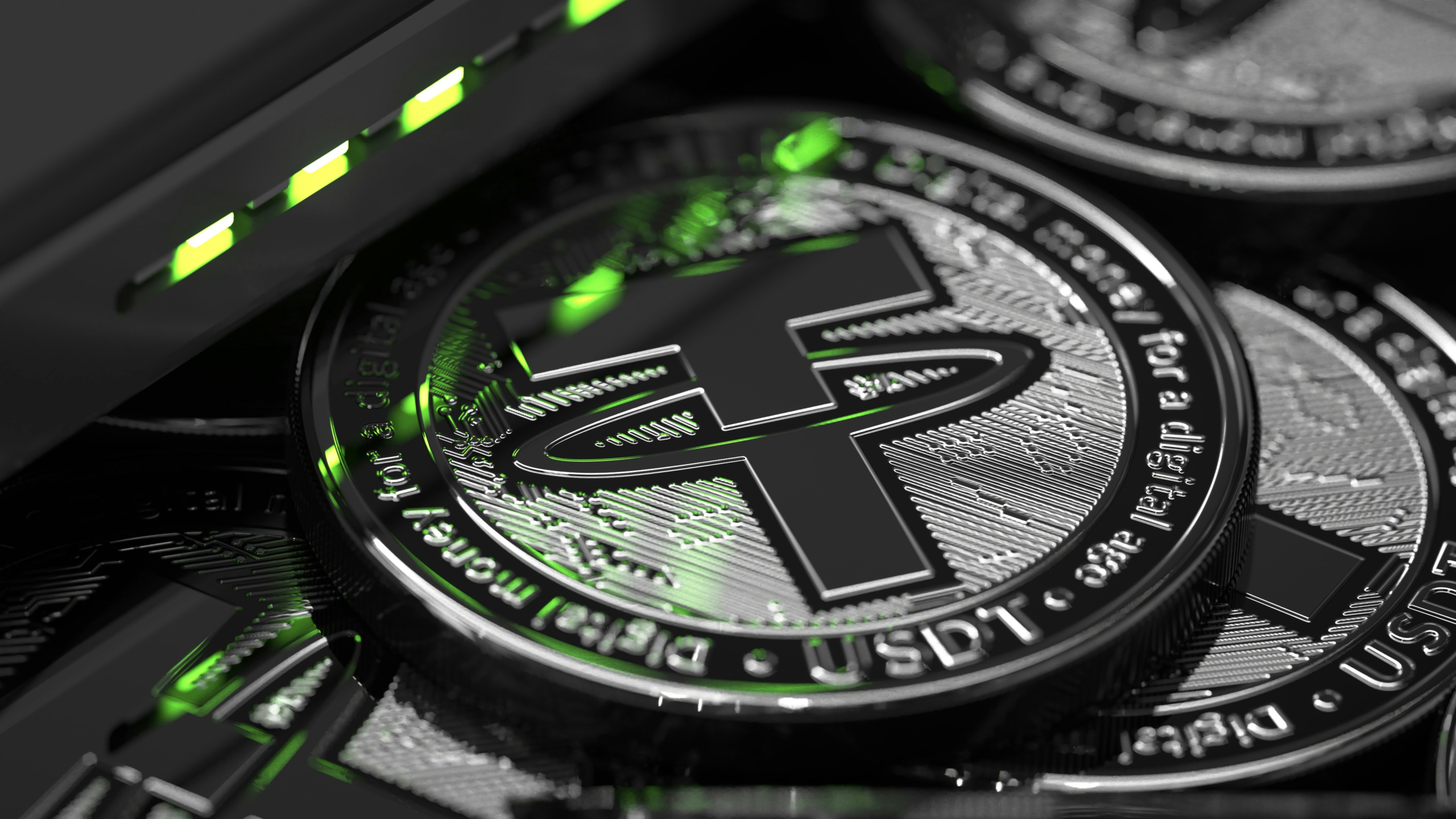
In the chaotic early days of cryptocurrency, when Bitcoin’s price swings could make or break fortunes overnight, a simple idea emerged that would reshape digital finance. What if traders could have the benefits of crypto (instant transfers, global accessibility) without the stomach-churning volatility? That question led to Tether, and today, this company has become one of the world’s most significant corporate gold buyers, accumulating reserves that rival many mid-tier central banks.
From Humble Beginnings to Financial Colossus
The Birth of Digital Stability
Back in 2014, when the crypto world was still finding its footing, Brock Pierce, Reeve Collins, and Craig Sellars launched what they initially called Realcoin. The concept was elegantly straightforward: create a digital token pegged one-to-one with the U.S. dollar. After rebranding to Tether, they launched USDT on Bitcoin’s blockchain, offering traders something unprecedented. A stable harbor in crypto’s tempestuous seas.
The timing couldn’t have been better. Traders needed a way to move between exchanges and park their funds without constantly converting back to traditional currencies. USDT became that bridge, and it worked spectacularly well. Today, trillions in trading volume flow through Tether annually across global exchanges.
The Numbers Tell an Extraordinary Story
By late September 2025, the scale of Tether’s operation had become staggering. USDT’s circulating supply reached $174.4 billion, backed by total assets of $181.2 billion. That means Tether maintained $6.8 billion in excess reserves. To put this in perspective, that’s larger than the GDP of many nations.
The company operates through entities incorporated in the British Virgin Islands and Hong Kong, part of the broader iFinex ecosystem that includes the Bitfinex exchange. Strategic moves like securing a stablecoin license in El Salvador and planning to relocate headquarters there demonstrate Tether’s agility. Notably, they’ve achieved this scale without traditional venture capital backing, funding growth entirely through operational profits.
Navigating Regulatory Waters
The path hasn’t been entirely smooth. In 2019, New York’s Attorney General launched an investigation that resulted in an $18.5 million settlement two years later, requiring ongoing reserve disclosures. The U.S. Commodity Futures Trading Commission added a $41 million fine for earlier misleading reserve claims.
These regulatory pressures pushed Tether toward greater transparency. The company now publishes quarterly attestations (first through MHA Cayman, then from 2022 onward through BDO Italia). However, these remain limited-scope reports confirming over-collateralization rather than full independent audits, which Tether has repeatedly promised but not yet delivered.
The scrutiny continues. S&P Global assigned Tether’s reserves a “weak” quality score in late 2025, citing concerns about transparency, custodian details, and increasing allocations to volatile assets. Critics note that attestations provide snapshots rather than continuous verification (think of it as the difference between checking your bank balance once a quarter versus having real-time access).
The Power Players Behind the Curtain
Concentrated Control Enables Swift Decisions
Tether’s ownership is concentrated in a small group. Chief financial officer Giancarlo Devasini is widely reported to be the largest shareholder, with an estimated 47% stake that Forbes valued at about $22 billion in early 2025. By comparison, CEO Paolo Ardoino and former iFinex CEO Jan Ludovicus van der Velde have each been reported to hold stakes worth around $1.8 billion, while general counsel Stuart Hoegner’s share has been estimated at roughly $1.2 billion, based on earlier disclosures.
This concentrated ownership has enabled rapid decision-making in crypto’s fast-moving markets. The company generated over $10 billion in profits just in the first three quarters of 2025 (a stunning figure that funded aggressive expansion without diluting ownership through public markets or venture capital).
Expanding Beyond Stablecoins
The corporate structure spans Tether Holdings Limited in the British Virgin Islands, iFinex Inc., and various subsidiaries pursuing diverse investments. Bitcoin mining projects in El Salvador, Uruguay, and Paraguay and stakes in infrastructure like data centers through investments in Northern Data and Bitdeer. These ventures were reorganized under divisions like Tether Power and Tether Evo in 2024.
The company has also launched tokenized offerings beyond USDT: XAUt backed by physical gold, and EUR₮ pegged to the euro. For professionals outside crypto, this resembles a family office scaled to sovereign dimensions (agile and profit-driven, yet drawing criticism for limited external accountability compared to regulated financial institutions).
The Transparency Question
S&P’s concerns about concentration in illiquid or volatile holdings raise important questions about risk management and asset segregation. The absence of a full audit remains a sticking point for skeptics, who wonder whether attestations suffice for an operation of this magnitude.
Building a Sovereign-Scale Reserve
The Traditional Foundation
Tether’s Q3 2025 attestation reveals a reserve structure dominated by conservative instruments. U.S. Treasury bills account for roughly $135 billion of the $181.2 billion in total assets. Add another $18 billion in reverse repurchase agreements and $6.4 billion in money market funds, and you have a foundation built on liquidity and stability.
But here’s where it gets interesting. The reserve also includes $9.9 billion in Bitcoin, plus additional holdings in gold, loans, and cash equivalents. This mix prioritizes liquidity while incorporating riskier elements (with Bitcoin and gold comprising approximately 12-13% of total reserves). That combination earned the “weak” quality rating from S&P, which flagged transparency gaps and concentration risks.
The stakes are high. When TerraUSD collapsed spectacularly, it demonstrated the catastrophic consequences of losing a stablecoin peg. Tether’s buffer has held through market stress, but the inclusion of volatile assets keeps analysts watchful.
The Gold Accumulation Story
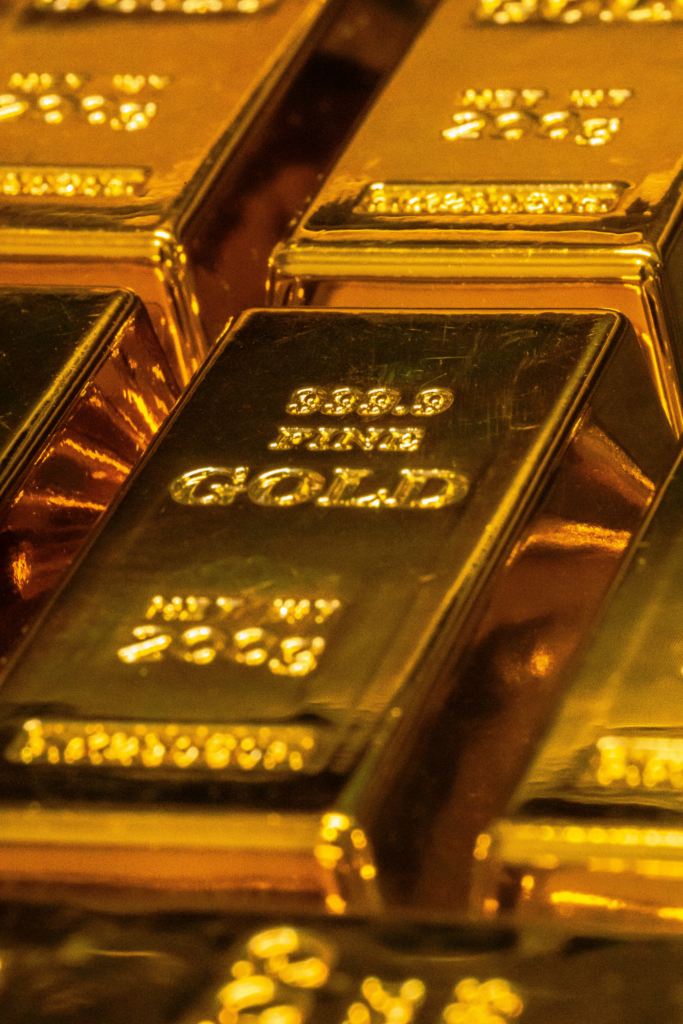
This is where Tether’s strategy becomes truly fascinating. By late 2025, the company had accumulated approximately 116 tons of physical gold, worth somewhere between $12.9 and $14 billion. All of it sits in Swiss vaults, split between two purposes: about 104 tons (roughly $13.7 billion) bolstering USDT reserves, and another 12 tons (around $1.5-1.6 billion market cap) backing the XAUt token.
The accumulation pace has been remarkable. At the end of 2024, Tether held about 48 tons valued at $5.3 billion. In just nine months, they added $7.6 billion in gold (including 26 tons in Q3 alone). That quarterly purchase surpasses the entire gold reserves of some central banks, including those of Greece or Qatar.
Understanding the Gold Strategy
Why would a stablecoin company become one of the world’s major gold buyers? The answer reveals sophisticated thinking about macroeconomic risks and reserve diversification.
Gold traditionally serves as a hedge against inflation and geopolitical uncertainty. Central banks worldwide have been increasing their gold purchases, and Tether is essentially following the same playbook. For a company holding roughly $135 billion in U.S. Treasuries, allocating 7-8% of reserves to gold provides diversification without compromising overall liquidity.
There’s also a regulatory angle. The U.S. GENIUS Act, which sets standards for compliant payment stablecoins, specifically excludes gold and Bitcoin from acceptable backing. Tether’s planned USA₮ product will adhere to these restrictions, keeping its reserve entirely in approved instruments. But the offshore USDT can maintain flexibility, incorporating alternative assets that some investors prefer.
Verifiable Yet Off-Chain
XAUt holders can verify their gold backing through Tether’s lookup tools, which display bar serial numbers, weights, and purity. It’s a clever application of crypto transparency principles to physical assets, though the actual verification mappings remain off-chain rather than encoded in blockchain records.
What This Means for the Financial World
A New Kind of Quasi-Central Bank
Tether’s evolution from 2014 startup to 2025 financial giant represents something unprecedented. The company provides liquidity in markets where traditional banks fear to tread, moving billions instantly across borders without the friction of legacy banking systems. In emerging markets with currency instability, USDT functions as a de facto dollar alternative.
Yet the transparency gap remains troubling. No full audit. “Weak” quality ratings from major agencies. Ongoing regulatory wariness in multiple jurisdictions. For finance professionals accustomed to rigorous oversight of banks and central banks, Tether’s structure feels simultaneously impressive and concerning.
The Hedging Perspective
From a portfolio standpoint, gold’s low and sometimes negative correlation with equities during periods of market stress makes it valuable for hedging. Tether’s gold accumulation during a period of equity market strength suggests management is preparing for potential volatility. The timing is notable (building gold reserves while markets remain relatively calm allows for better positioning than scrambling during crisis conditions).
Broader Implications
In an increasingly multipolar world where dollar dominance faces challenges, Tether occupies a unique niche. It’s simultaneously dollar-based (through the peg) and dollar-independent (operating outside U.S. regulatory frameworks). The company blends digital innovation with traditional safe-haven assets, creating something that doesn’t fit neatly into existing categories.
For Islamic finance practitioners, the asset-backed structure presents interesting parallels to Shariah-compliant frameworks that require tangible underlying assets. The gold backing specifically aligns with centuries-old Islamic financial principles, though full compliance would require additional considerations around governance and operations.
The Cautionary Notes
Impressive as Tether’s growth may be, significant questions remain unanswered. The concentration of ownership, limited transparency compared to regulated institutions, and exposure to volatile assets all merit careful consideration. The company operates in a gray zone. Too large to ignore, too opaque for complete confidence.
Market participants should understand what they’re dealing with. Tether isn’t a bank subject to regulatory oversight and deposit insurance. It’s not a central bank with governmental backing. It’s a private company that has created a vital piece of financial infrastructure while maintaining unusual levels of privacy about its operations.
The Road Ahead
Tether stands at a fascinating crossroads. With over $10 billion in profits in three quarters, the company has resources that rival small nations. Its gold holdings exceed those of many mid-tier central banks. Its stablecoin enables trillions in annual trading volume.
But success at this scale inevitably attracts scrutiny. Regulators worldwide are developing frameworks for stablecoins, and Tether’s ability to navigate these evolving requirements while maintaining its current operational model remains uncertain. The company’s move toward greater transparency through quarterly attestations represents progress, yet falls short of what critics demand.
For now, Tether has successfully threaded the needle (providing essential infrastructure while operating outside traditional regulatory frameworks). Whether this balance can persist as the company grows even larger remains one of the most intriguing questions in modern finance.
Can You Invest in Tether?
For those intrigued by Tether’s profitability and growth, a natural question arises: can you invest in the company itself? The short answer is no (not in any conventional sense).
Tether is a private company with no plans for an initial public offering. The concentrated ownership structure among founders and key executives means shares don’t trade on public markets. Unlike a typical tech unicorn pursuing an eventual IPO, Tether’s leadership has shown no interest in going public. Given their extraordinary profitability without external capital, they have little incentive to do so.
Secondary market platforms like EquityZen occasionally facilitate transactions where existing shareholders (such as early employees) sell their shares to accredited investors. However, these opportunities are rare, highly illiquid, and typically available only to institutional or high-net-worth accredited investors meeting stringent requirements. Even when available, such shares come with significant risks given the company’s regulatory uncertainties and lack of public financial audits.
For retail investors, the closest you can come to “investing in Tether” is purchasing USDT itself on cryptocurrency exchanges. However, this offers no upside (USDT is designed to remain pegged at $1, so you won’t profit from the company’s success). You could potentially earn yield by lending USDT through decentralized finance platforms, but this introduces additional risks beyond the scope of simple ownership.
The reality is that Tether’s extraordinary profits (exceeding $10 billion in just three quarters) flow entirely to its private ownership group. Unlike traditional financial institutions where you might buy shares to participate in that success, Tether remains firmly in the hands of its founding team. This is both a strength (enabling rapid decision-making) and a limitation (excluding outside investors from one of crypto’s most profitable enterprises).
Will there be an IPO? It has been reported that Tether is in talks to raise $15–20 billion by selling roughly 3% of the company at around a $500 billion valuation, via a private sale of equity.
The Final Word
The story of Tether is ultimately about innovation colliding with established systems. It’s about technology enabling new forms of financial infrastructure. And increasingly, it’s about gold (the ancient store of value) finding new relevance in the digital age. Whatever happens next, Tether has already reshaped how we think about money, stability, and reserves in the 21st century.