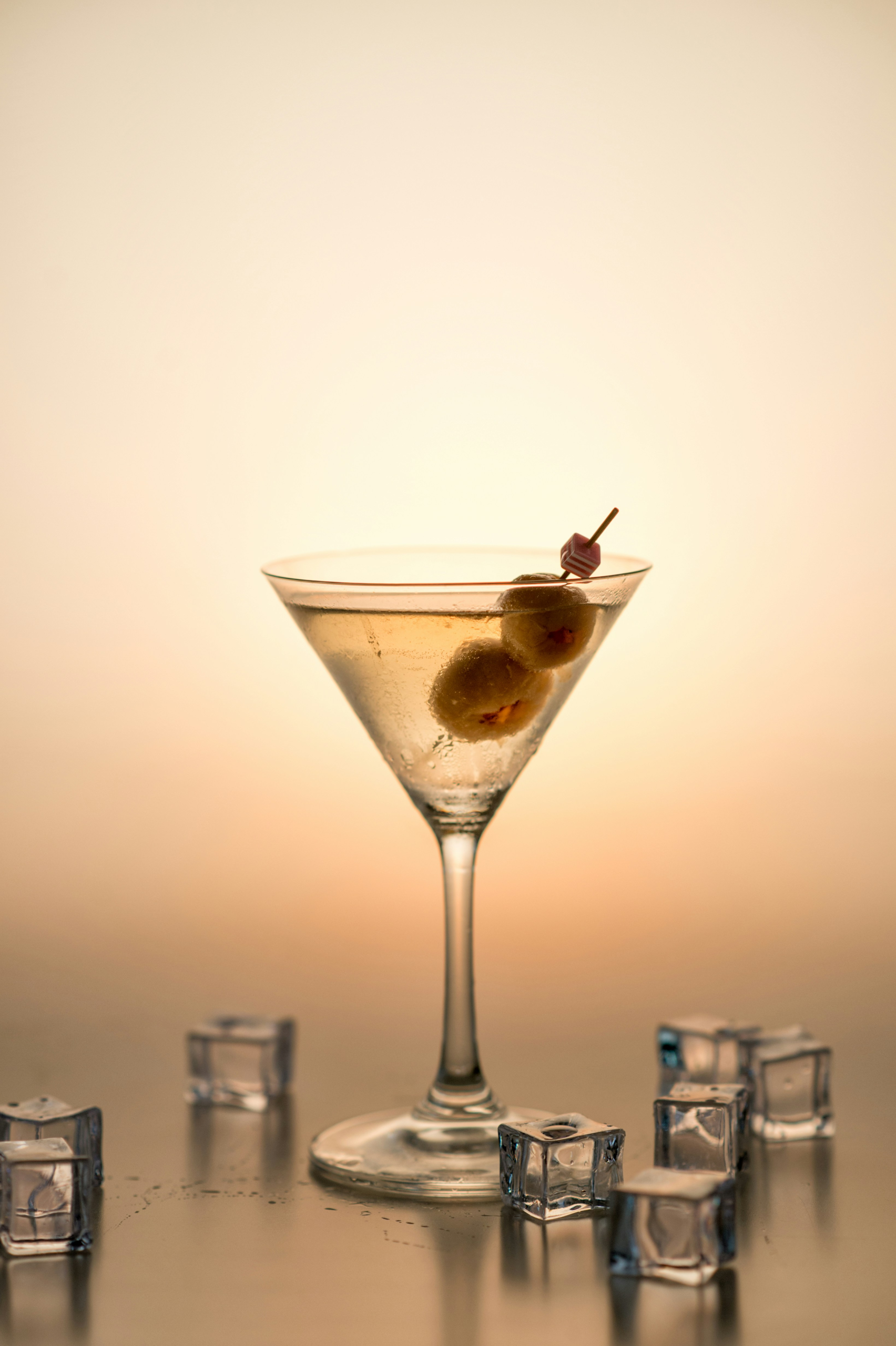
How a simple glass of gin and vermouth became a symbol of cool, control, and cultural cachet.
There are few drinks that signal intent quite like a martini. Ordered correctly, it arrives with the quiet precision of a well-tailored suit: minimalist, cold, and unapologetically sophisticated. This is not about quenching thirst. This is about establishing presence.
Some dismiss the martini as merely another cocktail. Yet across decades of cinema, literature, and cultural mythology, it has transcended its humble origins to become something far more significant: a cultural artifact, a literary device, a cinematic shorthand for elegance, danger, or calculated detachment. The martini, quite simply, is performance distilled.
Origins in Uncertainty
The martini’s provenance remains as murky as poorly mixed gin. Multiple theories compete for authenticity: some point to San Francisco bartender Jerry Thomas and his “Martinez” cocktail from the 1860s, a sweeter predecessor made with gin, sweet vermouth, maraschino liqueur, and bitters. Others credit a bartender named Martini di Arma di Taggia at New York’s Knickerbocker Hotel, who allegedly perfected the modern iteration around 1911 or 1912.
The emergence of London Dry gin in the late 19th century helped establish the “Dry Martini” as we know it, but it was Prohibition that truly forged the drink’s character. Bathtub gin, widely available yet harsh, demanded dilution with vermouth. The era’s taste for stronger, more austere drinks followed naturally, stripping away sweetness and complexity in favor of something more direct, more uncompromising.
By the mid-20th century, the martini had crystallized into a symbol of executive masculinity: terse, tailored, and increasingly dry. Three ingredients at most. No garnish flourish, no sugar rim. Just gin (or vodka), vermouth, and perhaps an olive, restrained to the point of monastic simplicity.
Historically, the martini belonged firmly in gin’s domain. London Dry, with its assertive botanicals, remained the standard in American and European establishments. Vodka entered the conversation later, as mid-century marketing positioned it as cleaner, smoother, more modern than gin’s herbal complexity. While vodka eventually claimed significant territory in martini culture, purists maintain that the drink’s authentic soul resides with gin.
An Excellent Choice, Mr. Bond
Few cocktails claim such intimate connection to the silver screen. Cary Grant nursed them with characteristic aplomb. Humphrey Bogart brooded over them in smoky rooms. Grace Kelly and James Stewart shared them poolside in Rear Window. The martini became visual shorthand for sophistication, a prop that didn’t merely occupy the frame but actively defined character.
Then came Bond.
Ian Fleming’s James Bond didn’t merely drink martinis; he revolutionized the ritual. In Casino Royale (1953), Bond orders his now-legendary Vesper: “Three measures of Gordon’s, one of vodka, half a measure of Kina Lillet. Shake it very well until it’s ice-cold, then add a large thin slice of lemon peel.”
The Vesper was precise, high-octane, and controversially shaken rather than stirred. This broke with established tradition. Bartenders argued that shaking introduced air bubbles and cloudiness, dulling the gin’s delicate botanicals and disrupting the drink’s balance. Bond remained unmoved. His version achieved iconic status despite purist objections.
Notably, Bond’s preference wasn’t strictly vodka-based but rather a blend of gin and vodka, reinforcing the martini’s fluid rather than fixed nature. Modern recreations require substitutes like Lillet Blanc or Cocchi Americano (the latter closer to the original’s distinctive bitterness).
Hemingway’s Austere Devotion
While Bond performed his martini ritual on screen, Ernest Hemingway pursued his in reality. Like everything Hemingway approached, he did so with uncompromising intensity. His preferred martini was punishingly dry: minimal vermouth, sometimes just a glass rinse. In correspondence, he described the ideal martini as “ice-cold, very dry, and very large.”
Though more famously associated with daiquiris and absinthe, Hemingway treated the martini with similar Spartan reverence: nothing superfluous, no concessions to comfort. It remained the drink of someone disinclined to have pleasure delivered too easily.
The Minimalist’s Declaration
The martini’s true power lies in its refusal to accommodate. There is no sugar to soften impact, no juice to mask intention. It’s not designed for casual consumption. It’s a drink for those who know precisely what they want, or at least wish to project such certainty.
Dryness itself became social currency. The drier the martini, the stronger the signal of sophistication and control. By the 1950s, fashion dictated whispering “vermouth” while pouring only gin. Others would coat the glass interior and immediately discard the liquid. The drink had transcended mere refreshment to become pure attitude.
The glassware carries equal significance. The martini’s signature V-shaped glass with its elongated stem debuted in 1925 at the International Exhibition of Modern and Decorative Arts in Paris, designed after the champagne coupe. A proper martini arrives chilled and unadorned, held delicately rather than clutched, maintaining distance between drinker and drink.
Ritual Over Recipe
The contemporary martini may appear clean and straightforward, yet it carries decades of accumulated cultural meaning. To order one dry, stirred, with a twist is to participate in shared ritual, employing shorthand that signals worldliness, maturity, and discernment.
Like any living ritual, it continues evolving. Today’s martini landscape includes the dirty martini (enhanced with olive brine), the vodka martini (cleaner, less botanical), and the espresso martini (technically not a martini, yet undeniably popular). Even the lychee martini, once associated with Asian hotel lounges and rooftop bars, has found global acceptance.
Whether one views these as dilution or evolution depends entirely on perspective and tolerance for change.
Legacy and Reinvention
The martini’s survival stems not from rigidity but from strategic adaptation. Even traditionalists eventually acknowledged vodka’s merits: while not part of the drink’s origin story, vodka brought clarity and a new kind of neutrality that appealed to modern tastes. Premium vodka brands like Grey Goose became synonymous with “new” martini culture. For gin enthusiasts, names like Tanqueray No. Ten, Bombay Sapphire, and Monkey 47 serve distinct purposes: the first representing classic excellence, the second offering approachability, the third providing exotic, intensely botanical complexity.
Ultimately, the martini functions less as beverage than as cultural signal. To order a martini, to specify dryness, to demonstrate gin knowledge, to consider garnish carefully is to claim membership in a particular lineage. You’re not simply having a drink. You’re participating in a quiet performance that predates your arrival and will continue long after your departure.
The Next Round
The martini’s variations are as telling as its constants. The ratio of gin to vermouth, choice of garnish, quality of ice, even glass shape: each modification creates distinct experience. Future exploration might examine seven iconic martini styles, from the Vesper to the Gibson to more adventurous contemporary interpretations.
Until then, remember: the martini serves intent more than thirst. It isn’t refreshing in any conventional sense. It’s defining.