In the world of fine wine, few names carry the gravitas and cultural significance of Bordeaux. This storied region of southwest France has transcended its agricultural origins to become a symbol of sophistication, representing not merely a beverage but an entire philosophy of refined living. For the discerning professional and cultured traveler, understanding Bordeaux extends far beyond simple appreciation; it represents fluency in the universal language of luxury and taste.
The Foundation of Excellence: Geography as Destiny

Bordeaux’s reputation rests upon a geographical foundation that reads like a masterclass in terroir. The region encompasses over 6,000 wine-producing châteaux, each contributing to a tapestry of flavors that has influenced global viticulture for centuries. The Gironde estuary acts as nature’s dividing line, creating two distinct personalities within the region that speak to different aspects of the wine lover’s palate.
The Left Bank, encompassing the prestigious Médoc and Graves appellations, presents wines built upon gravel-rich soils that have weathered millennia of geological transformation. These foundations nurture Cabernet Sauvignon to extraordinary heights, producing wines of architectural complexity and remarkable longevity. The structured tannins and concentrated fruit create bottles that improve over decades, making them both drinking pleasures and investment opportunities.
Across the estuary, the Right Bank offers an entirely different expression of Bordeaux’s character. Here, in the hallowed vineyards of Saint-Émilion and Pomerol, clay and limestone soils favor Merlot-driven blends that speak with a softer, more immediately accessible voice. These wines possess an inherent elegance that makes them companions to both intimate dinners and grand celebrations.
The Entre-Deux-Mers region, positioned between the Dordogne and Garonne rivers, rounds out Bordeaux’s geographical trinity. This area has found its calling in white wine production, creating blends of Sauvignon Blanc and Sémillon that offer both immediate pleasure and surprising age-worthiness at accessible price points.
The Architecture of Flavor: Mastering the Bordeaux Blend
Perhaps no concept in global winemaking has been more widely adopted than the Bordeaux blend. This approach to winemaking, which combines multiple grape varieties to create complexity greater than the sum of its parts, has become the template for premium wine production across continents.
Cabernet Sauvignon forms the backbone of most Left Bank blends, contributing structure, tannin, and the aging potential that makes these wines cellar treasures. Its bold character provides the framework upon which other varieties can build nuanced layers of flavor and aroma.
Merlot serves as the diplomatic mediator in these blends, offering roundness and fruit-forward characteristics that make wines approachable in their youth while maintaining the depth necessary for long-term development. Its prominence in Right Bank wines reflects the variety’s ability to express both power and finesse.
Cabernet Franc adds the aromatic complexity that elevates good wines to greatness. Often described as the “spice” in the blend, it contributes floral notes and a distinctive herbaceous quality that provides lift and freshness to the finished wine.
The supporting cast of Petit Verdot and Malbec, typically used in small percentages, functions like seasoning in haute cuisine. These varieties add color intensity, spice notes, and structural depth that complete the wine’s personality without overwhelming its primary character.
The Understated Elegance of White Bordeaux
While red Bordeaux commands most of the attention in international markets, the region’s white wines represent some of the most compelling values in fine wine today. The dry whites from Pessac-Léognan, in particular, offer a sophistication that rivals the world’s most celebrated white wines at a fraction of the price.
The marriage of Sauvignon Blanc and Sémillon creates a synergy that showcases both varieties at their best. Sauvignon Blanc contributes vibrant acidity and citrus notes that provide freshness and food-pairing versatility. Sémillon adds texture and complexity, with its waxy, honeyed character developing beautifully with age.
The sweet wines of Sauternes and Barsac represent winemaking at its most technically demanding. The noble rot process, where Botrytis cinerea concentrates sugars and develops complex flavors, creates wines of extraordinary balance and longevity. These dessert wines, far from being mere afterthoughts, represent some of the most prestigious bottles in any serious cellar.
The Language of Hierarchy: Understanding Bordeaux Classifications
The classification systems that govern Bordeaux represent more than historical curiosities; they continue to influence global wine markets and shape collector preferences worldwide. These hierarchies, while sometimes criticized for their static nature, provide a framework for understanding quality and value that has proven remarkably durable.
The 1855 Classification, commissioned by Napoleon III for the Paris Exposition, ranked 61 red wine producers from the Left Bank and 27 sweet white producers from Sauternes and Barsac. This system, virtually unchanged for over 150 years, continues to command premium prices and collector attention.
The Saint-Émilion Classification takes a more dynamic approach, theoretically revising its rankings every decade. This system recognizes the evolution of quality over time, though changes remain relatively rare and controversial.
The Crus Bourgeois classification and the Graves Classification provide additional quality benchmarks, offering recognition to producers who may not achieve the highest rankings but consistently deliver exceptional wines.
For the modern wine enthusiast, these classifications serve as starting points rather than absolute guides. Understanding their historical context and market influence allows for more informed purchasing decisions and deeper appreciation of the wines themselves.
The Rhythm of Vintage Variation

Unlike many New World regions that enjoy consistent climatic conditions, Bordeaux’s vintage variation adds both risk and excitement to the wine experience. The Atlantic influence brings unpredictable weather patterns that can dramatically affect both the quantity and quality of each year’s harvest.
Spring frosts can devastate flowering vines, while summer rainfall during crucial ripening periods can dilute flavors and complicate harvest decisions. Conversely, ideal conditions can produce legendary vintages that become benchmarks for decades.
The en primeur system, unique to Bordeaux, allows wine lovers to purchase wines as futures before bottling. This system offers both opportunities and risks, as early purchases of great vintages can yield significant savings, while poor vintages can leave buyers disappointed.
Professional wine buyers and serious collectors rely on vintage charts and detailed harvest reports to make informed decisions. Years such as 2005, 2009, 2010, 2016, and 2019 have already established themselves as modern classics, commanding premium prices and intense collector interest.
The Economics of Excellence
Bordeaux operates as both an agricultural region and a sophisticated marketplace. The Place de Bordeaux system facilitates global distribution through a network of négociants who serve as intermediaries between producers and international markets. This structure allows château owners to focus on viticulture while maintaining worldwide reach.
The investment potential of top Bordeaux wines has created an entirely separate market from casual consumption. Wine investment funds, auction houses, and private collectors treat certain bottles as alternative assets, with performance tracked like stocks or bonds.
For the lifestyle-conscious consumer, this economic structure means that careful selection can yield both drinking pleasure and potential financial returns. Understanding market dynamics allows savvy buyers to identify undervalued producers and vintages.
A Connoisseur’s Selection: Châteaux Worth Discovering

Everyday Bordeaux (€12-25) True Bordeaux character doesn’t require a significant investment. Château Larose-Trintaudon, with its 172-hectare (425-acre) vineyard in Haut-Médoc, produces consistently reliable wines that showcase classic Left Bank structure. From the Right Bank, Château Tour Saint-Christophe offers excellent Saint-Émilion character at remarkable value.
The Entre-Deux-Mers region provides exceptional white wine values, with estates like Château Bonnet delivering fresh, elegant blends of Sauvignon Blanc and Sémillon. For those seeking reliable everyday drinking, the Bordeaux and Bordeaux Supérieur appellations offer numerous options from producers like Château Thieuley and Château de Parenchère.
Accessible Excellence (€25-75) For those beginning their Bordeaux journey or seeking exceptional everyday drinking, several châteaux offer outstanding value. Château Sociando-Mallet from Haut-Médoc consistently produces structured, age-worthy wines that rival classified growths at a fraction of the cost. From the Right Bank, Château de Valandraud’s second wine, Virginie de Valandraud, offers a taste of Saint-Émilion terroir with remarkable accessibility.
Château Pichon Baron’s second label, Les Tourelles de Longueville, provides an entry point into Pauillac’s grandeur, while Château Lynch-Bages’ Echo de Lynch-Bages delivers the estate’s signature power and elegance in a more approachable format.
Mid-Range Prestige (€75-200) This category represents Bordeaux’s sweet spot for serious collectors and regular consumers of fine wine. Château Pichon Longueville Comtesse de Lalande consistently produces wines of extraordinary finesse, combining power with elegance in a way that few estates can match. From Saint-Émilion, Château Figeac offers one of the region’s most distinctive expressions, with a unique terroir that produces wines of remarkable complexity.
Château Ducru-Beaucaillou from Saint-Julien represents the epitome of elegance in Left Bank winemaking, while Château La Conseillante from Pomerol showcases the sublime potential of Merlot-driven blends. The Rothschild family’s influence appears beautifully in this category with Château d’Armailhac (formerly Mouton-Baronne-Philippe), offering a taste of Pauillac terroir with the legendary Rothschild touch at more accessible prices than its famous siblings.
For white wine enthusiasts, Château Smith Haut Lafitte’s white wine from Pessac-Léognan offers world-class quality that rivals the finest white Burgundies.
Investment Grade (€200-1000+) At the pinnacle of Bordeaux hierarchy sit the wines that define luxury and investment potential. The Rothschild dynasty dominates this category with Château Lafite Rothschild, whose elegant, perfumed style has made it perhaps the most coveted wine in Asia, and Château Mouton Rothschild, famous for its artistic labels and powerful, opulent wines that showcase Pauillac at its most dramatic.
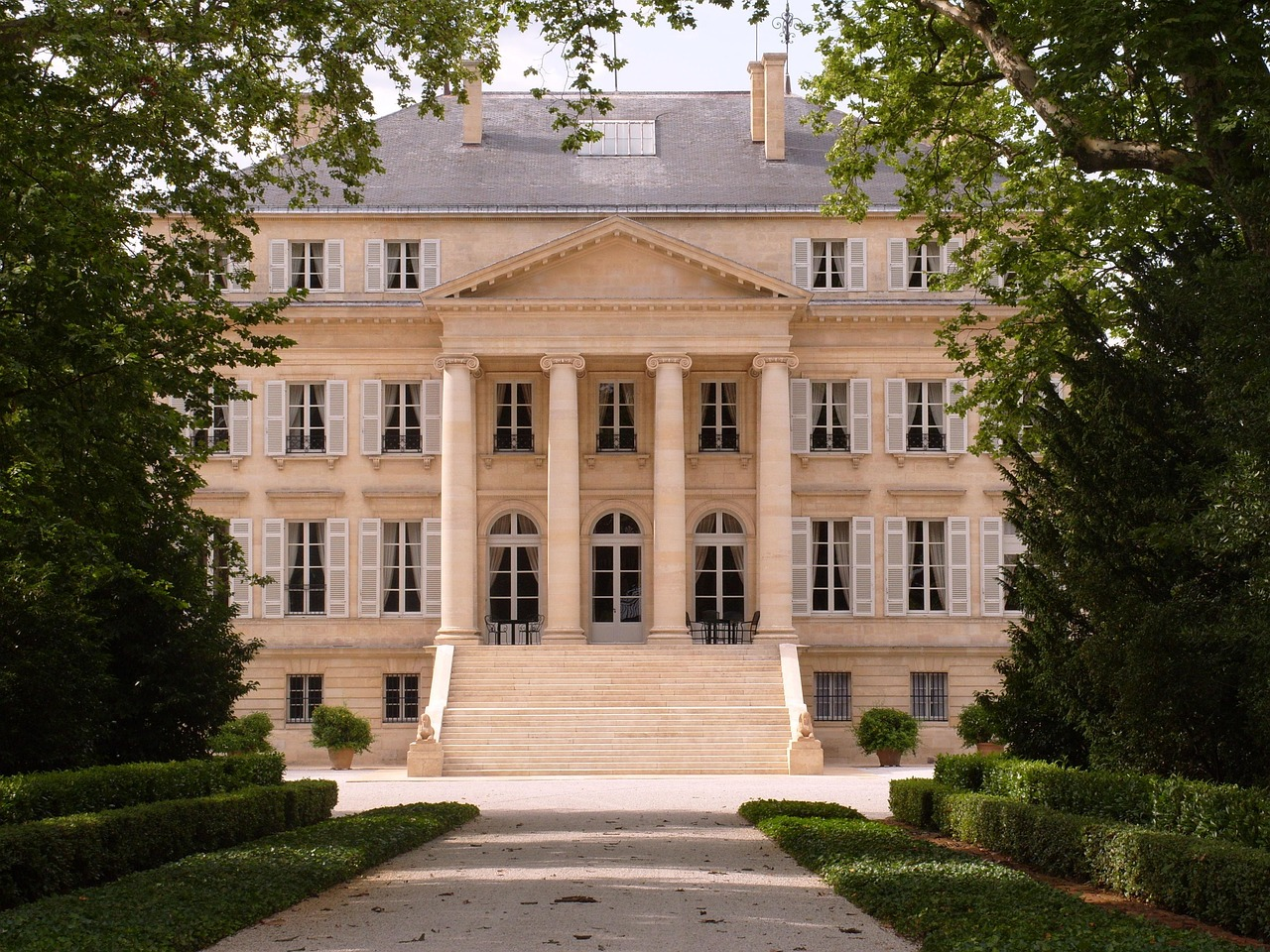
Château Margaux epitomizes elegance and refinement, producing wines that age gracefully for decades while maintaining an almost ethereal quality. Château Latour represents power and longevity, with wines that can improve for half a century or more.
From the Right Bank, Château Pétrus stands alone as perhaps the world’s most coveted Merlot, while Château Le Pin produces wines of extraordinary concentration and hedonistic appeal. For those seeking the ultimate in sweet wine luxury, Château d’Yquem remains the gold standard, with prices reflecting its unparalleled reputation and aging potential.
The Art of Pairing: Bordeaux at the Table

The true test of any wine lies in its ability to enhance the dining experience. Bordeaux’s diversity makes it remarkably food-friendly, with styles to complement virtually any cuisine or occasion.
Left Bank reds, with their structured tannins and concentrated fruit, pair beautifully with rich, fatty dishes. A perfectly aged Pauillac alongside a prime ribeye represents one of gastronomy’s great marriages, with the wine’s tannins cutting through the meat’s richness while the fat softens the wine’s structure. Consider a Château Lynch-Bages with aged beef or a Château Pichon Baron with lamb—these pairings showcase how terroir and cuisine can create transcendent experiences.
Right Bank wines, with their softer textures and more approachable character, complement a broader range of dishes. A Château Figeac pairs magnificently with duck breast, while a Château La Conseillante elevates simple roasted chicken to fine dining heights. The Merlot-driven character of these wines makes them particularly versatile with Mediterranean and Asian fusion cuisines.
The dry whites excel with shellfish, goat cheese, and dishes featuring citrus accents. A Château Smith Haut Lafitte white wine transforms a simple oyster course into a memorable experience, while its acidity provides palate cleansing between bites.
Sauternes transcends traditional dessert wine roles, pairing magnificently with foie gras, spicy Asian cuisine, and rich blue cheeses. Château d’Yquem with Roquefort represents one of gastronomy’s most celebrated combinations, while lesser-known producers like Château Suduiraut offer similar magic at more accessible prices.
The Cellar as Sanctuary: Proper Storage and Aging
The structured nature of many Bordeaux wines makes them ideal candidates for extended aging. Proper cellaring becomes not just a storage solution but a fundamental aspect of wine appreciation. Temperature stability around 55°F (13°C), appropriate humidity levels, and protection from light and vibration create the conditions necessary for wines to develop their full potential.
Left Bank wines from classified growths often require decades to reach their peak, with the greatest examples continuing to improve for 40 years or more. Right Bank wines generally mature more quickly but can still age gracefully for 15 to 30 years.
Understanding these aging curves allows collectors to plan their purchases and consumption, ensuring that wines are enjoyed at their optimal moments. The patience required for proper aging reflects the deeper philosophy of Bordeaux: that true quality cannot be rushed.
Innovation Within Tradition
Modern Bordeaux faces the challenge of maintaining its traditional character while adapting to contemporary realities. Climate change, sustainability concerns, and evolving consumer preferences have prompted significant innovations across the region.
Organic and biodynamic farming practices have gained widespread adoption, with prestigious châteaux like Pontet-Canet leading the charge. These methods, while labor-intensive and expensive, reflect a commitment to environmental stewardship that resonates with modern consumers.
The approval of new grape varieties such as Touriga Nacional and Marselan represents perhaps the most significant change in Bordeaux’s modern history. These varieties, chosen for their ability to adapt to changing climatic conditions, ensure the region’s continued relevance in an uncertain future.
Digital innovation has also found its place in this traditional region. Blockchain technology and QR code systems now help combat fraud and provide traceability, protecting both producers and consumers in an increasingly complex global marketplace.
The Global Influence of Bordeaux
The influence of Bordeaux extends far beyond the borders of France. Wine regions across the world have adopted Bordeaux’s blending philosophy, bottle shapes, and marketing approaches. From Napa Valley’s Meritage wines to Australia’s Coonawarra blends, the Bordeaux template has become the international standard for premium red wine production.
This global adoption has created both opportunities and challenges for traditional Bordeaux producers. While it validates their approach and creates new markets for their expertise, it also increases competition and forces constant innovation.
For the wine enthusiast, this global influence means that understanding Bordeaux provides a framework for appreciating wines from around the world. The ability to recognize Bordeaux’s influence in wines from Chile’s Maipo Valley or China’s Ningxia region adds depth to tasting experiences and purchasing decisions.
The Enduring Relevance of Bordeaux
In an era of rapid change and constant innovation, Bordeaux’s enduring relevance might seem surprising. Yet the region’s ability to balance tradition with innovation, to maintain quality while adapting to new realities, ensures its continued importance in the global wine landscape.
For professionals in hospitality, retail, or investment, fluency in Bordeaux remains essential. The region’s influence on global wine culture, its role in luxury markets, and its continued production of world-class wines make it impossible to ignore.
More fundamentally, Bordeaux represents an approach to life that values patience, craftsmanship, and the pursuit of excellence. In a world increasingly focused on immediate gratification, the region’s commitment to long-term thinking and quality over quantity offers a compelling alternative philosophy.
The art of living well, as expressed through Bordeaux wine, encompasses not just the consumption of exceptional products but the appreciation of the history, tradition, and craftsmanship that make them possible. Whether enjoyed in a Parisian restaurant, a London club, or a private home, Bordeaux wine carries with it the weight of centuries of human effort and the promise of continued excellence.
For those who understand its language, Bordeaux offers more than mere refreshment. It provides a connection to history, a benchmark for quality, and a reminder that some things in life are worth waiting for. In every bottle lies not just wine, but the distillation of human ambition and the expression of a culture that has made the pursuit of excellence its defining characteristic.
Ready to Begin Your Bordeaux Journey?
Whether you’re seeking your first bottle of authentic Bordeaux or looking to add investment-grade wines to your collection, the region offers exceptional opportunities at every price point. Start with our everyday recommendations to develop your palate, then explore the prestigious châteaux that have defined luxury for centuries.
Curious which Bordeaux wine best suits your next dinner party or cellar addition? Share this article with fellow wine enthusiasts or begin your exploration with a carefully chosen bottle from our recommended selections.