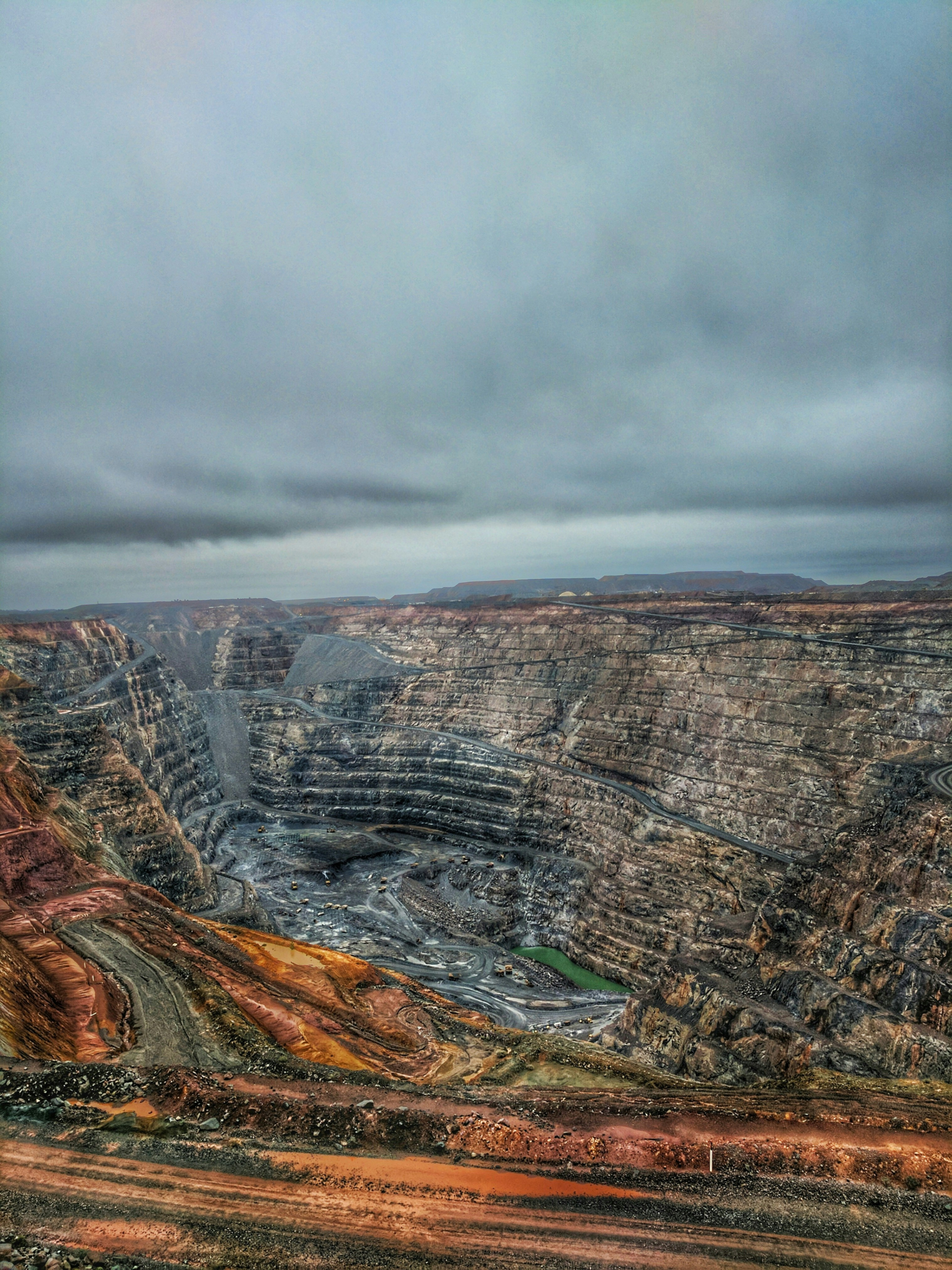
Rare earths are another feature of global competition. Most people have never heard of neodymium or dysprosium, yet these elements are found in the electric vehicles we drive, the wind turbines that generate our electricity, and the smartphones in our pockets. They’re not particularly rare in a geological sense, but they’re difficult to extract and even more challenging to refine. That difficulty has created one of the most strategically sensitive markets in the global economy.
For anyone trying to understand where the world is heading with the energy transition, defence technology, or advanced manufacturing, rare earth supply deserves close attention.
This article walks through what rare earths actually are, how rare earth supply works, why these materials matter so much, and how an investor might build an informed view of the sector.

What Rare Earths Are and Why Some Matter More
Rare earths refer to a group of seventeen elements, consisting of the fifteen lanthanides along with yttrium and scandium. They are usually found together in the same mineral deposits, but seldom in forms that make extraction simple. The hard part is not locating them. It is separating them from each other and from the surrounding material. This involves a series of demanding chemical and thermal processes, developed at scale by only a handful of countries.
Within this group of seventeen elements, a small subset drives most of the economic value. The table below focuses on the metals that underpin global demand.
Key Rare Earth Elements
| Element | Category | Main Uses | Why It Matters |
|---|---|---|---|
| Neodymium (Nd) | Light | Permanent magnets for EV motors, wind turbines, robotics | Delivers the power density that modern electric motors require. Central to global demand. |
| Praseodymium (Pr) | Light | NdPr magnets, aerospace alloys | Enhances magnet performance, especially at varied temperatures. |
| Dysprosium (Dy) | Heavy | High temperature magnets in EVs and defence systems | Increases resistance to demagnetisation. Scarce and strategically sensitive. |
| Terbium (Tb) | Heavy | High stability magnets and specialist electronics | Improves magnet strength under heavy load. Extremely limited supply. |
| Lanthanum (La) | Light | Optics, camera lenses, catalysts | Important for industrial processes but lower in value. |
| Cerium (Ce) | Light | Polishing compounds, catalysts | Used widely in semiconductor and optics polishing. |
| Samarium (Sm) | Light | Samarium cobalt magnets, aerospace applications | Tolerates intense heat and radiation. |
| Yttrium (Y) | Often grouped with heavy | Lasers, ceramics, medical imaging | Supports specialist manufacturing and imaging technologies. |
Here’s what matters most:
Neodymium and praseodymium (the NdPr combination) form the backbone of permanent magnets used in electric vehicle motors, wind turbines, and robotics. They deliver the power density that makes modern electric motors possible. Without them, motors become heavier, less efficient, and less compact.
Dysprosium and terbium are the heavy rare earths that matter most. They’re added to magnets to improve their performance at high temperatures and prevent demagnetisation under stress. Electric vehicles operating in hot climates need dysprosium. Defence systems that face extreme conditions require it. Supply is limited, and that scarcity makes these elements strategically sensitive.
Lanthanum and cerium support a wide range of industrial processes, from catalyst production to glass polishing and optical applications. They’re important, but they don’t command the same strategic attention as the magnet materials.
Samarium enables high-temperature magnets that can withstand the intense conditions found in aerospace and defence applications. It’s less commonly discussed than neodymium, but it fills a specific technical niche.
Yttrium appears in medical imaging equipment, lasers, and specialist ceramics. It sits somewhere between the light and heavy rare earths in terms of atomic weight and applications.
For investors and policymakers, the most significant elements are neodymium, praseodymium, dysprosium, and terbium. These four determine the strength, temperature tolerance, and stability of the magnets that power electric motors and generators. They’re what everyone is racing to secure.
Why These Materials Matter

Most modern electric vehicles rely on rare earth magnets to achieve their current combination of range, efficiency, and compact motor design. The permanent magnets inside EV motors deliver high torque in a compact form. They remain efficient across wide temperature ranges and under varying load conditions. Some manufacturers use induction motors that avoid rare earths altogether, but these typically involve trade-offs in efficiency and packaging. The majority of EVs on the road today use permanent magnet motors because they deliver the best overall performance.
Wind energy faces similar constraints. Turbine generators that use rare earth magnets can operate more reliably, produce more consistent output, and require less maintenance. When you’re building renewable energy capacity at the gigawatt scale, those differences matter. This is why rare earth supply has become part of national energy security discussions.
These materials also sit inside smartphones, laptops, headphones, and audio systems. Medical imaging depends on them for precision. Satellites and radar systems need them for durability and accuracy. In each case, rare earths let engineers push the boundaries of performance, miniaturisation, and energy efficiency.
Their importance isn’t just technical. It’s economic and geopolitical. Countries that want to compete in electric vehicles, renewable energy, or advanced defence systems need access to these materials. That reality shapes industrial policy across Europe, North America, and Asia.
How the Supply Chain Works
The rare earth supply chain moves through three stages. The first is mining. Deposits exist in China, Australia, the United States, Vietnam, Myanmar, and parts of Africa. China remains by far the largest producer, accounting for around 270,000 metric tons out of roughly 390,000 tons of global production in 2024. Mining itself isn’t the main constraint. On paper, identified reserves appear sufficient to meet projected demand growth, but the challenge lies in bringing new projects to production under realistic cost and environmental constraints.
The second stage, refining and separation, is where the bottleneck sits. China built extensive refining capacity over many years through a combination of industrial focus, lower costs, skilled labour, and environmental standards that were, historically, less stringent than those in the West. Other countries have struggled to match that advantage. Even rare earth mines operating outside China often ship their concentrates to China for processing. As of 2025, China was processing around 90 percent of global rare earth supply, refining not only its own ore but also material from Australia, Myanmar, and the United States.
The third stage is magnet manufacturing. This remains concentrated in China and Japan. Several other companies are working to expand capacity, but the technical barriers are substantial and the economics are challenging.
What you end up with is a supply chain where extraction is geographically distributed, but processing and final production remain concentrated in one region. This structure shapes both pricing dynamics and geopolitical risk. It’s why governments describe rare earths as a strategic vulnerability.
Geopolitics and Dependence
The rare earth supply chain has been the focus for some countries. The United States, Japan, South Korea, and the European Union all depend on these materials for defence platforms, renewable energy systems, semiconductor fabrication, and advanced electronics. China controls most of the refining capacity and a large share of magnet production.
Governments have responded with funding and policy initiatives. The United States has supported new processing projects. Australia is expanding refining capacity. Japan has worked to develop alternative supply arrangements. Europe is building its own framework for securing critical materials. These efforts reflect growing concern about rare earth supply security.
Progress has been steady but slow. Refineries require environmental approval, specialist chemical handling capabilities, and technical expertise. The time to build can be many years. The result is a gradual improvement in diversification rather than a rapid shift. China will remain central to the rare earth supply chain for the foreseeable future, while other regions build capacity step by step.
How Investors Engage with the Sector
Rare earths aren’t traded like copper or gold. There’s no widely used futures market. Prices are quoted by specialist agencies rather than on major exchanges. That means most investors approach the sector through equities or exchange traded funds.
Producers offer direct exposure to specific deposits, but they face geological, operational, and financial risk. Processing companies sit closer to the strategic bottleneck, but they require greater technical capacity and regulatory approval. Diversified miners offer indirect exposure with lower volatility. ETFs provide a broad view across several markets and stages of the supply chain, although the exposure becomes less concentrated as a result.
The most useful approach often involves combining these different types of exposure. This helps you observe how individual projects evolve while maintaining a more stable view of the industry as a whole.
Using a Research Basket to Track the Sector
A practical way to make sense of the sector is to follow a small selection of companies across different parts of the supply chain. This can include producers, development-stage projects, diversified miners, and a couple of ETFs that capture broader regional activity. Tracking updates on production, financing, regulation, and project timelines across this mix helps create a clearer view of how the market is evolving. It is not a recommendation. It is simply a method for observing the industry in a more organised way.
Over time, this approach builds a deeper understanding of how the sector reacts to policy changes, shifts in electric vehicle demand, or movements in prices for neodymium, praseodymium, dysprosium, and terbium.
Company and ETF Profiles
Lynas Rare Earths operates one of the few large-scale refining facilities outside China, with its advanced materials plant in Malaysia processing rare earth concentrates from its Mount Weld mine in Western Australia. The company is expanding its Malaysian operations with a new facility to separate heavy rare earths, building on its existing light rare earth processing capacity.
MP Materials owns and operates the Mountain Pass mine in California, America’s only scaled rare earth mining and processing site, and is working to integrate processing and magnet manufacturing in the United States with a new facility in Texas. The company has secured substantial government support for its expansion.
Iluka Resources is developing a rare earth refinery in Australia that could become an important non-Chinese processing hub. The project faces technical and regulatory hurdles, but it represents a serious attempt at building alternative capacity.
Arafura Rare Earths is advancing the Nolans project in Australia. The project remains in development and is still seeking the financing needed to reach production.
Energy Fuels, traditionally a uranium-focused company, is transitioning into rare earth processing in the United States. It’s an example of how companies with expertise in complex materials handling are looking at rare earths as an adjacent opportunity.
Rio Tinto provides indirect exposure through its broader mining portfolio, which includes modest but growing rare earth production from its operations in the United States.
The VanEck REMX ETF seeks to track companies involved in producing, refining, and recycling rare earth and strategic metals. It offers diversified exposure across the sector. Several ETFs provide access to critical minerals and rare earth producers, including those with significant Chinese operations, giving investors exposure to different parts of the rare earth supply chain.
The Performance Context
Rare earth equities move in cycles. Prices for neodymium and praseodymium respond to changes in electric vehicle production, policy shifts, and variations in export controls. Project timelines, environmental approvals, and production guidance can influence share prices sharply. Because the market is narrow and the number of significant players is small, volatility can be high even when long term demand remains stable.
For this reason, a multi-year view tends to be more useful than watching short term price movements. A performance table for the research basket will be added once the list is finalised.
Risks and Realities
The rare earth sector carries several structural risks. Prices can swing quickly because supply is concentrated and demand responds to policy decisions. New projects face long lead times and can be delayed by environmental requirements or financing constraints. Many companies require significant capital investment before they generate any revenue. Policy decisions in China, the United States, or Europe can influence both supply and demand.
Researchers in Europe, the United States, and Japan are exploring motor designs that reduce reliance on rare earths. These efforts will take time to reach commercial scale, but they form part of the long term picture. Improvements in recycling technology could also ease some pressure on primary supply, though commercial-scale recycling solutions remain in early stages.
None of this changes the fundamental importance of rare earths, but it does require investors to adopt a patient and informed approach.
Outlook
Demand for rare earth magnets is expected to rise as electric vehicles become a larger share of global sales and as renewable energy projects expand. Robotics, automation, and defence equipment add further layers of structural demand. The concentration of refining capacity will remain a feature of the market, although diversification efforts will continue.
Recycling could eventually contribute more significantly, but commercial-scale solutions aren’t yet mature. Early-stage projects show progress, but they remain a supplement rather than a replacement for primary supply.
Conclusion
Rare earths are crucial to the technologies that define economic progress and industrial capacity. They influence how countries build energy systems, transport infrastructure, defence platforms, and advanced manufacturing capabilities. Understanding the sector requires attention to geology, technology, and geopolitical strategy.
By following a structured group of companies and ETFs, it becomes possible to observe how the industry evolves and how policy and market forces shape its development. Rare earths will continue to matter for years to come, and staying informed about rare earth supply offers insight into several of the most important shifts in the global economy.