I first came to Japan on business – twice to Tokyo, both times leaving with the same quiet promise to return one day on my own terms. Work trips offer efficiency but rarely depth; I saw the precision, not the poetry. So I returned, this time for three unhurried weeks, to experience the country without schedules or suits. It didn’t disappoint. Japan, I realised, rewards curiosity in layers. I already know I’ll be back.
For decades, Tokyo has dominated Japan’s global image with its relentless pace and immaculate order. Yet in 2025, another city has quietly stepped into focus. Osaka, long regarded as the nation’s pragmatic second city, has become its most humanly compelling destination. It is where Japan’s famed efficiency meets warmth, and where travellers increasingly linger not out of obligation, but by choice.
Situated in the Kansai region, Osaka has always been the nation’s commercial soul. Merchants once plied its canals with rice and silk; today, it deals in technology, design, and hospitality. What distinguishes travelling to Osaka in 2025 is not only its pace of renewal but the remarkable value it offers. With the yen trading at favourable exchange rates, Japan has rarely been so accessible for international visitors. What was once an expensive, aspirational trip now feels within reach, and Osaka rewards that accessibility with quiet confidence. You feel it as soon as you arrive: things simply work. The train leaves exactly on time, baggage handling is swift and reliable, and the city reveals itself with understated precision.
Kansai International Airport, built on an artificial island in Osaka Bay, remains one of modern engineering’s boldest projects. It connects the city to Asia-Pacific hubs and North America, with nonstop services to Singapore, Sydney, Los Angeles, and San Francisco, plus convenient one-stop connections to London and New York via major hubs. From the airport, it takes 34 to 44 minutes to reach Namba on the Nankai Rapi:t limited express, or about 65 to 70 minutes to Osaka Station and Umeda on JR’s Kansai Airport Rapid. For those already exploring Japan, the Tokaidō Shinkansen’s Nozomi runs Tokyo to Shin-Osaka in about two hours and 25 minutes, delivering passengers into the city’s glass-roofed station complex where everything from bullet trains to rooftop gardens coexist in architectural harmony. Many visitors building a Japan itinerary find Osaka the perfect counterpoint to Tokyo’s intensity and Kyoto’s reverence.

Osaka’s energy is different from Tokyo’s. It is less vertical, more grounded. A city built on conversation, on food, on laughter that doesn’t feel out of place anywhere. Locals are famously direct, a quality that surprises many foreign visitors used to the formality of the capital. That openness gives Osaka its charm: a cosmopolitan hub that remains disarmingly approachable. In cafés and taxis, strangers talk; in restaurants, chefs lean forward to ask where you’re from. It is Japan without the mask.
Historically, Osaka has been a city of traders and craftsmen, and that mercantile spirit still infuses its streets. The gleaming towers of the Umeda district rise alongside narrow alleys where lanterns sway above izakayas and record shops. Walk a few blocks and centuries seem to overlap. At one end stands Osaka Castle, rebuilt several times since the 1500s but still commanding with its tiered eaves and sweeping moats. A short ride away, Shitenno-ji Temple, founded in 593 and often considered Japan’s oldest state-sponsored Buddhist temple, offers a space of stillness that feels almost implausible in a city of 2.7 million at the heart of a 19-million-strong metropolitan area. The juxtaposition is constant: samurai walls and bullet trains, quiet shrines and digital billboards, all existing not in tension but in balance.
The balance extends to the experience of visiting. As global cities grapple with rising travel costs, Osaka’s combination of affordability and quality has made it essential for anyone travelling to Osaka and beyond in the Kansai region. A favourable exchange rate allows visitors to experience Japanese hospitality at a fraction of the cost found elsewhere in Asia. Mid-range hotels feel premium; fine dining becomes attainable. Even simple details, like free Wi-Fi in public spaces or universal contactless payments through ICOCA (Kansai’s IC card) and other nationwide cards such as Suica, plus widespread acceptance of PayPay and credit cards, contribute to a sense of ease that few major cities manage to sustain.
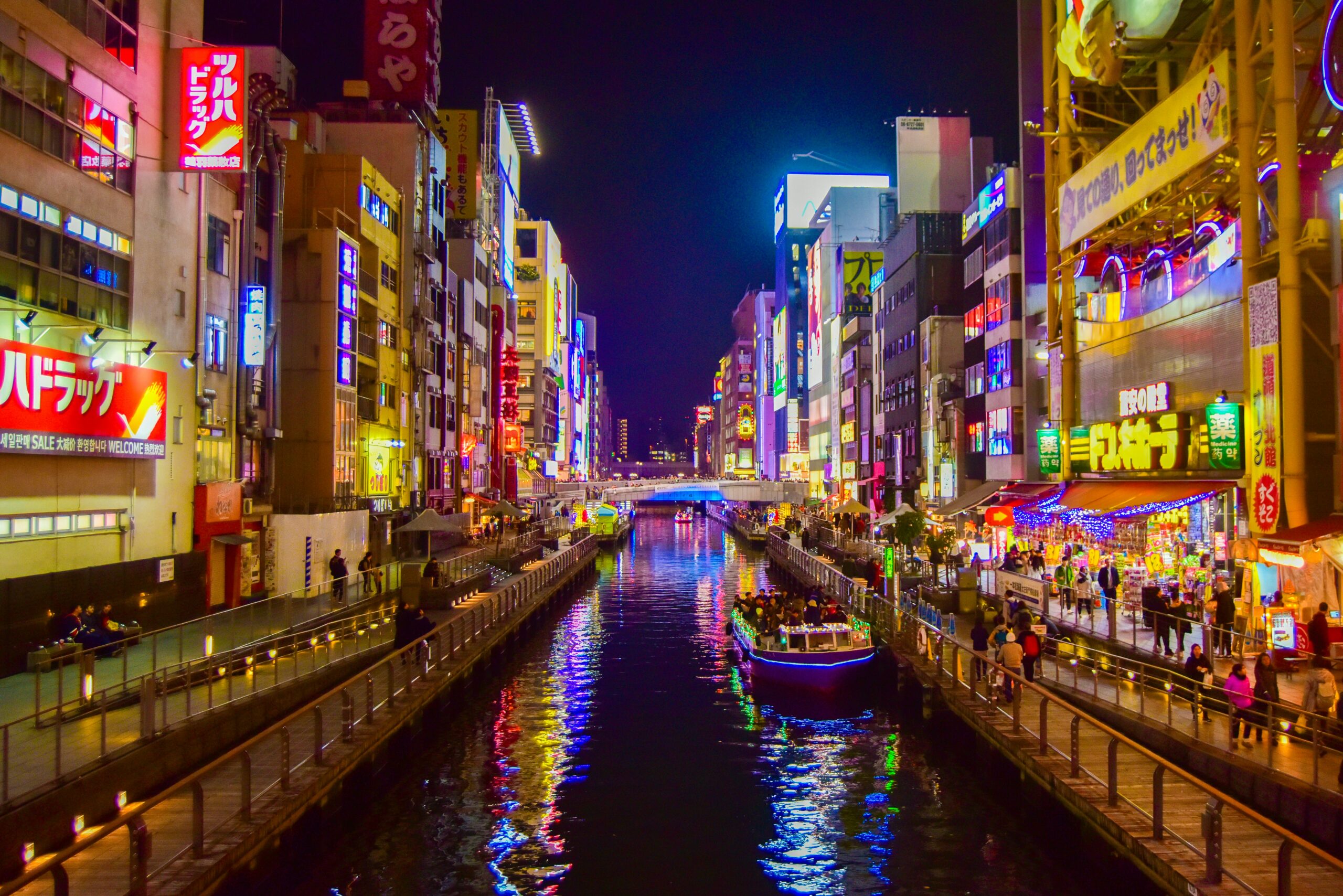
Osaka is a sensory city, and nowhere is that clearer than in Dotonbori. By day, it’s an energetic shopping district where tourists gather beneath the iconic moving crab sign (installed in 1972) outside Kani Doraku restaurant. But at night, Dotonbori transforms into something else entirely. The district glows in technicolour, its neon signs reflecting off the canal in rippling streaks of red, gold, and electric blue. The air becomes thick with the scent of grilled meat, sweet soy glaze, and the unmistakable aroma of frying batter.

This is where Osaka’s soul reveals itself through food. Street vendors work with theatrical precision, flipping takoyaki in practiced movements, each golden sphere a perfect balance of crispy exterior and molten octopus-studded interior. The technique looks simple but takes years to master: the right heat, the exact moment to turn, the final flourish of bonito flakes that dance in the rising steam. At okonomiyaki restaurants, diners gather around sizzling griddles built into communal tables, watching as chefs layer cabbage, pork, noodles, and batter into savoury pancakes the size of dinner plates. Each restaurant claims its own secret to the perfect okonomiyaki, whether it’s the mountain yam that makes the batter impossibly light or the particular blend of sauces drizzled in crosshatch patterns over the top.
Kushikatsu, Osaka’s beloved deep-fried skewers, line the menus of countless izakayas throughout Dotonbori. Quail eggs, lotus root, beef tongue, asparagus wrapped in pork, each item breaded and fried until golden, then dipped once (only once, the signs remind you) in communal sauce. The city takes its food culture seriously enough to enforce unwritten rules, yet casually enough that a meal out feels like joining a neighbourhood party. Locals joke that “eating until you drop” is Osaka’s unofficial sport, and watching the steady stream of diners moving from yakitori stalls to ramen counters to dessert shops, you understand they’re not entirely joking.
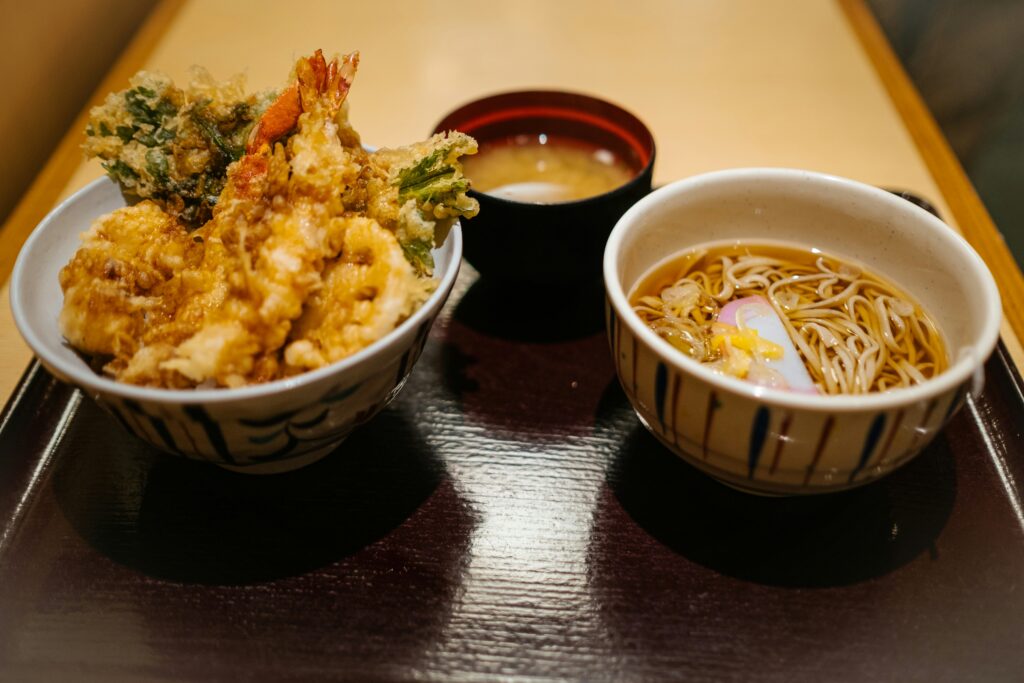
Osaka has been called the Nation’s Kitchen for centuries, and its food culture defines its character: unpretentious, inventive, and generous. Michelin-starred chefs coexist happily with noodle shops that have stood for generations. At Kuromon Ichiba Market, vendors grill fresh scallops and sea urchin over charcoal while shoppers stand elbow-to-elbow, eating as they browse. Every meal feels crafted rather than produced, and the hospitality, warm without being intrusive, lingers long after you’ve paid the bill.

For travellers, this generosity translates into rhythm. Mornings might begin in a kissaten, one of Osaka’s traditional coffee houses where thick-cut toast and perfectly brewed coffee have been served the same way since the Showa era. Days unfold at a human pace: browsing vintage shops in Amerikamura, discovering hidden shrines between apartment blocks, taking in sweeping views from Abeno Harukas (Japan’s tallest building), or marvelling at Pacific sea life at the Osaka Aquarium Kaiyukan. Evenings slip into long dinners that stretch late into the night. Conversations flow easily here, perhaps because the city never feels performative. Even its luxury is understated. High-end hotels such as the Conrad or W Osaka emphasise calm design over opulence, their lobbies scented with cedar and jazz rather than marble and mirrors.

Osaka’s seasons add another dimension to its allure. Spring turns the castle grounds into a haze of cherry blossoms; locals picnic along the Okawa River beneath pink canopies. Summer is exuberant: hot, humid, filled with festivals and fireworks over the Yodo River, though the rainy season in June and occasional typhoons in late August remind visitors to plan accordingly. Autumn transforms the parks into an impressionist palette of gold and crimson. Winter brings clarity with crisp mornings, bright skies, and the perfect weather for hot pot dinners that steam up restaurant windows.
Part of Osaka’s appeal is its reach. From here, the rest of Kansai unfolds effortlessly. Kyoto’s temples lie half an hour away; Nara’s deer-filled parks are within forty minutes; Kobe’s harbourside restaurants, twenty-five. For families and theme park enthusiasts, Universal Studios Japan, one of Asia’s most popular attractions, sits just minutes from the city centre. The Shinkansen and regional rail lines make day trips so seamless that many visitors treat Osaka as a base rather than a stop, the centre of a weeklong exploration of culture, cuisine, and coastal scenery.
With Expo 2025 on Yumeshima Island (April 13 to October 13) showcasing “Designing Future Society for Our Lives,” the bay area is undergoing a significant transformation. Infrastructure upgrades include expanded metro lines and next-generation smart-city systems. The event’s theme feels apt: Osaka has long been where Japan experiments with the future at a human scale.
That humanity is what most distinguishes the city. Tokyo dazzles; Kyoto enchants; Osaka welcomes. It is the smile from a shopkeeper who hands back your forgotten umbrella, the chef who insists you try a different sake “because it suits your mood better,” the stranger who walks you to your destination just to make sure you don’t get lost. These gestures, small and unadvertised, form the fabric of the city. For visitors accustomed to transactional tourism, the experience can be quietly transformative.
Cultural life only deepens that impression. The National Bunraku Theatre keeps Japan’s puppet-drama tradition alive with performances that feel both ancient and hypnotic. The Nakanoshima Museum of Art, opened in 2022, showcases everything from post-war Japanese abstraction to contemporary design. Independent galleries cluster in Nakazakicho, a former residential district now filled with ateliers and coffee roasters. Evenings might end with live jazz in Kitashinchi or craft cocktails in a twelve-seat bar high above Midosuji Avenue. There is sophistication here, but never pretence.
Beneath it all lies an infrastructure that simply works: reliable connectivity, immaculate public transport, and an efficiency that never slips into sterility. Trains run exactly on schedule. English signage is abundant, and translation apps bridge the rest. Many nationalities enjoy visa-free entry for short stays. Tipping is unnecessary; respect is universal. In Osaka, courtesy feels less like etiquette and more like second nature.
This mixture of pragmatism and personality explains why so many travellers return. They come as part of a broader Japan journey and find themselves drawn back specifically to Osaka, captivated by a sense of equilibrium that is increasingly rare. Osaka offers stimulation without exhaustion, culture without chaos, structure without stiffness. It manages, somehow, to be efficient without being mechanical and hospitable without being performative. You leave with the sense that the city has nothing to prove. It knows exactly what it is.
In 2025, that self-assurance feels timely. As Expo preparations transform the bay into a showcase of sustainability and innovation, Osaka’s quiet virtues of order, generosity, and composure seem newly relevant. The future, it suggests, need not be hurried. It can be built, as this city has been, on patience, humour, and craft. For the curious traveller, there may be no better lesson, and no better place to learn it than in Osaka.


