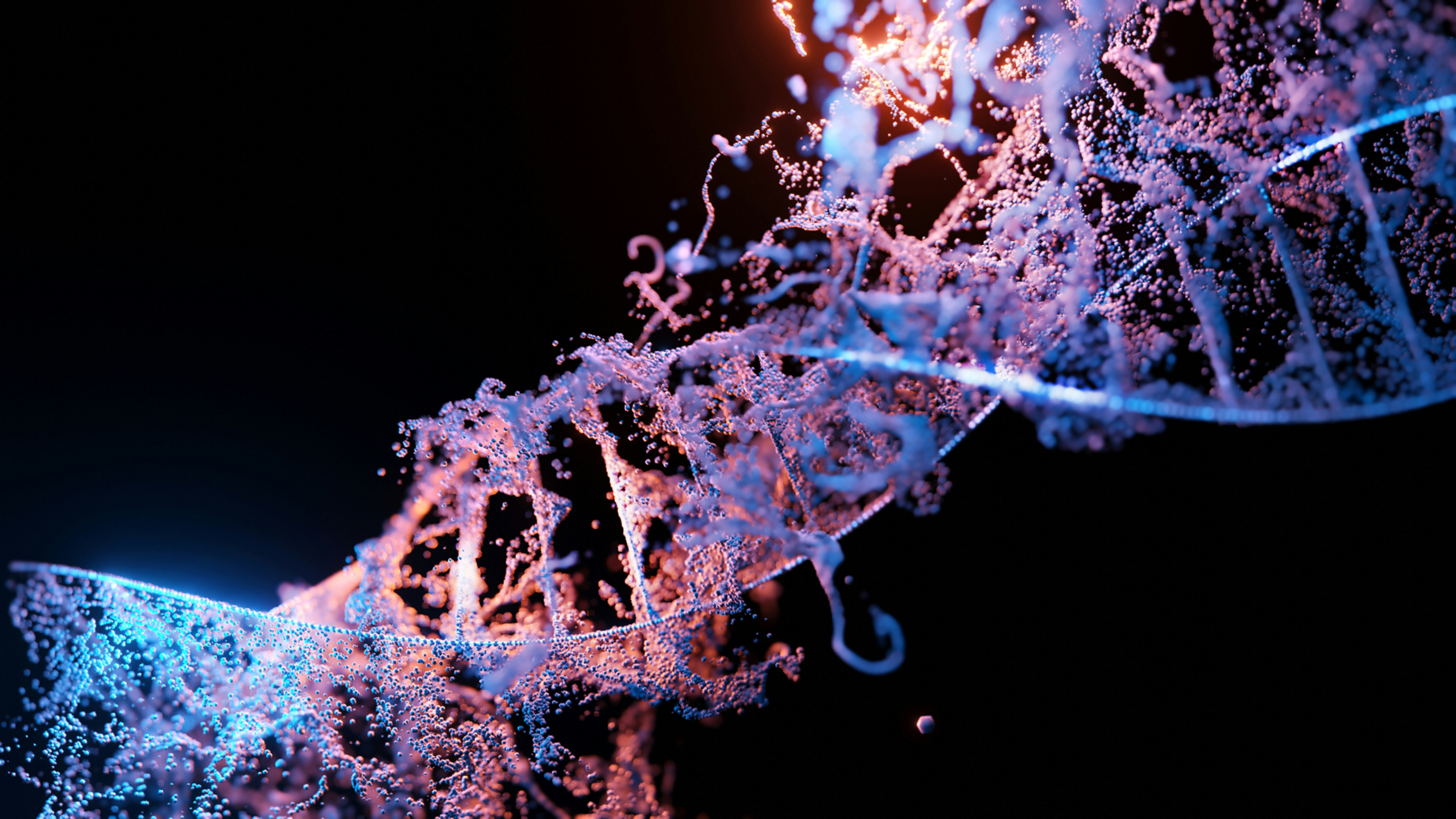
AI in medicine is reorganizing the foundations of modern healthcare. Algorithms now read medical images with superhuman precision, design new drugs in months rather than years, and create digital twins of patients to test treatments before they begin. The same technologies powering language models and autonomous vehicles are decoding human biology, linking genomics, imaging, and clinical data into continuously learning systems. The discipline of medicine is shifting from generalized protocols to individual prediction, from treatment to prevention, and from hospitals as crisis centers to networks of intelligent care.
Data as Foundation

The transformation begins with data. Every test, scan, and clinical note contributes to an immense stream of information that artificial intelligence can finally synthesize into actionable insights. Models trained on vast datasets are learning to recognize patterns too complex for human interpretation: subtle correlations between genetics, lifestyle, and disease that take years to detect through traditional study. Google DeepMind’s Med-PaLM represents this capability well. Rather than simply answering isolated medical questions, it reasons across multiple forms of input, combining medical texts, clinical records, and imagery to provide insights that resemble the pattern recognition of experienced clinicians. Some hospitals are now adopting federated learning, which allows AI systems to train across many institutions without sharing the underlying data, simultaneously preserving privacy while improving accuracy.
The more effectively fragmented data is connected, the closer medicine moves toward true personalization. Yet challenges remain. Medical records are inconsistent across organizations, privacy laws differ between jurisdictions, and biases can emerge through uneven data quality. The promise of AI in medicine depends less on collecting more information and more on connecting it responsibly. When data quality and integration improve, so does the reliability of the insights built upon them.
From Discovery to Diagnosis

Where data becomes material is in discovery. Drug development has historically been slow, costly, and uncertain, with only a fraction of potential compounds ever reaching patients. This timeline is now compressing dramatically through AI in medicine. Through generative chemistry, algorithms can imagine entirely new molecules, predict how they will bind to target proteins, and simulate their effects before any laboratory work begins. Insilico Medicine’s AI-designed drug for idiopathic pulmonary fibrosis has advanced through human trials, marking a turning point: the drug pipeline is being rebuilt around computation as much as chemistry. Meanwhile, DeepMind’s AlphaFold project has mapped the three-dimensional structures of over 200 million proteins, providing a foundation that could accelerate treatments for everything from cancer to infectious disease.
AI is simultaneously reshaping clinical trials themselves. Digital simulations can model how specific patient populations might respond to new therapies, helping researchers design smaller, faster, and more ethical studies. The emergence of digital twins, virtual replicas of individual patients, allows scientists to explore multiple treatment pathways safely before testing them in humans. What was once an industrial pipeline has become an information science, with computation guiding every stage.
Diagnosis is changing with equal velocity. In radiology, algorithms can detect abnormalities that radiologists may overlook in routine practice. Radiomics, which extracts quantitative data from imaging scans rather than simply reading them visually, allows AI to spot patterns that predict disease long before symptoms emerge. DeepMind’s breast-cancer detection model achieves greater accuracy than expert clinicians. PathAI’s collaboration with the Mayo Clinic has produced automated grading systems for tissue samples that reduce human error and accelerate results. Portable ultrasound devices from Butterfly Network, guided by AI analysis, are expanding access to imaging far beyond traditional hospital settings, bringing diagnostic capability to rural clinics and developing regions.
PathAI and similar platforms are now applying quantitative grading to tissue samples, reducing variability and accelerating pathology workflows. The same analytical approach is spreading to blood tests, electrocardiograms, and even voice recordings, which can reveal early signs of neurological or cardiac decline. The future of diagnostics lies in integration across these signals. Rather than separate snapshots of health, AI offers a continuous, evolving picture of the body over time, updating constantly as new measurements arrive.
Treatment itself is becoming adaptive and dynamic. In oncology and cardiology, digital twins simulate how individual patients will respond to different therapies, allowing physicians to adjust treatment in real time. Companies such as Tempus and Flatiron Health merge genomic and clinical data to predict how tumors might evolve, enabling more personalized oncology care. The applications of AI in medicine extend to hospital operations: institutions are deploying predictive systems to manage intensive care resources, forecast hospital readmissions, and identify patients at highest risk of complications before they materialize. At home, continuous monitoring through glucose sensors, smartwatches, and recovery trackers allows algorithms to anticipate problems before they become emergencies.
This shift from crisis response to constant optimization may prove as consequential as the arrival of antibiotics. Medicine is moving toward maintaining equilibrium rather than simply treating disease, from reaction to prevention.
The Road Forward
Yet transformation at this scale brings genuine tension. AI models are only as reliable as the data training them, and medical data often reflects the imperfections of the healthcare systems that produced it. When datasets are incomplete or unbalanced, predictions can become skewed, creating gaps in performance across populations or conditions. Regulators are beginning to respond carefully to these concerns. The FDA’s framework for Software as a Medical Device allows AI systems to evolve under regulatory supervision rather than in rigid categories. The EU’s new AI Act treats healthcare algorithms as “high risk,” demanding transparency and human oversight at every stage.
Privacy remains the deeper issue. Advanced models thrive on personal health information, yet no consensus exists about who owns or controls such data, or how it should be used. Federated learning and synthetic datasets offer protective approaches, but the larger ethical question persists: how do we advance medicine without surrendering individual autonomy? Trust is equally critical. Patients and clinicians alike must believe that an AI recommendation is both accurate and explainable. Black-box reasoning has no place in life-or-death decisions. The next phase of AI in medicine will depend fundamentally on interpretability: systems that can show their reasoning as clearly as they deliver results.
The direction forward is already visible. Healthcare is becoming predictive, preventive, and participatory. Doctors will not be replaced, but those who master AI tools will have capabilities far beyond today’s standard of care. Each person may soon have a personal health assistant that interprets laboratory results, monitors subtle physical changes, and adjusts lifestyle recommendations before symptoms appear. Hospitals could evolve from crisis centers into coordination hubs. Drug development may become as computational as biological. Public health agencies are already using AI to track disease outbreaks in real time, model antibiotic resistance patterns, and allocate medical resources efficiently across populations.
Through all its complexity, one direction is clear. AI is not replacing the human element in medicine. It is amplifying it. The empathy, judgment, and intuition that define excellent medicine remain irreplaceable and central. What changes is the scope and precision of what physicians can see and accomplish.
The integration of artificial intelligence into healthcare represents the most profound shift since the discovery of antibiotics. We are entering an era when illness can be predicted before it emerges, when treatment evolves with the patient, and when technology and human care merge into a single continuous process. The risks are real: bias, privacy violations, and erosion of trust if systems fail to deliver transparency. Yet the potential is equally substantial: making medicine more accurate, more accessible, and more personal than ever before.
The stethoscope defined an era of medicine. AI is defining the next.