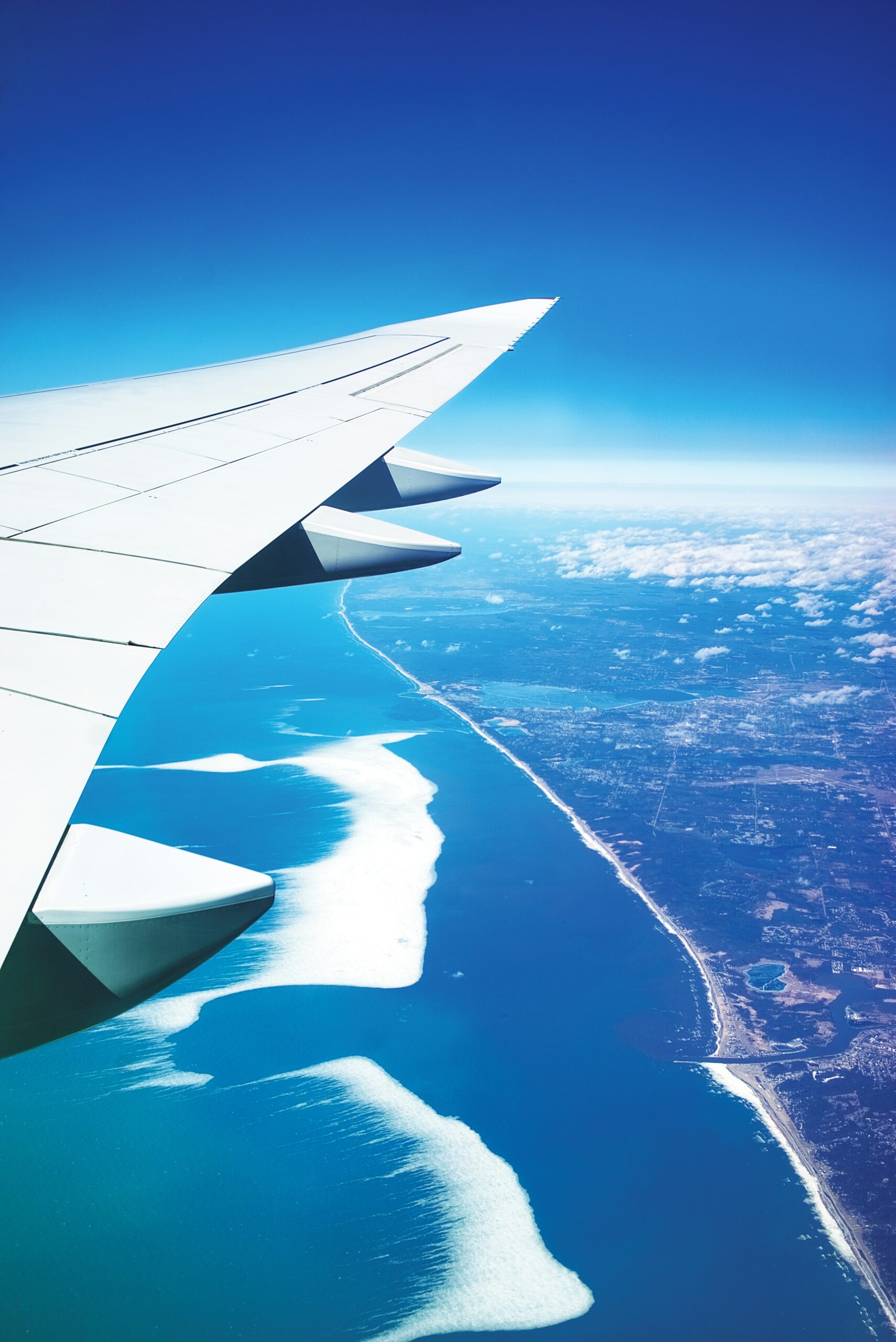
From Buenos Aires to Bangkok, Cape Town to Sydney — the classic round-the-world journey reimagined for modern travelers and digital nomads alike.
There’s something deeply satisfying about stepping onto a plane in knowing that weeks or months later, you’ll touch down at that same airport from the opposite direction. Round-the-world travel is more than a chain of flights connecting distant cities. It’s a narrative arc that carries you through continents and across oceans, weaving together experiences that could never fit into a conventional “there and back” itinerary.
For some, that narrative unfolds quickly: three weeks of constant movement, capturing glimpses of the world in one magnificent sweep. For others, it stretches luxuriously across months or even a full year, with each destination becoming a temporary home base. Either way, the magic lies not just in where you go, but in how the journey unfolds as a continuous circle.
I’ve done two such journeys myself. The one that still stands out began in London and took me first to Buenos Aires, where late nights of tango and Malbec became my introduction to the trip. From there I crossed to New Zealand’s North Island, continued down to Queenstown in the South, and then flew on to Cairns in Queensland for a liveaboard dive trip on the Great Barrier Reef. The circle carried me next to Bangkok and up to Chiang Mai for a two-day cookery course before returning to London. It was three and a half weeks of movement and discovery – intense, exhilarating, and unforgettable.
By comparison, my second loop, London to Miami (and a side trip to Cartagena), Los Angeles, onward to Honolulu, Sydney, Singapore, and back to London, was more straightforward, but it never felt quite as magical. Buenos Aires and Asia, with Oceania between them, created a journey with a rhythm and richness that this more northerly route couldn’t match.
The Fast Circle
Picture this: you leave Europe behind and fly south across the Atlantic. Hours later, you emerge into the intoxicating rhythm of Buenos Aires. Here, tango music drifts from open-door milongas where couples move with practiced grace across polished floors. The streets pulse with the aroma of parrillas, smoke curling around massive cuts of beef, while glasses of deep red Malbec catch the light of late evening. This isn’t a city that merely entertains visitors; it seduces them completely.
From Buenos Aires, the great westward leap begins. The Pacific stretches endlessly, but on its far shore lies Oceania and an entirely new chapter of your story.
New Zealand reveals landscapes that feel almost primeval. In Rotorua, geysers steam and hot springs bubble from the earth itself. Lake Taupo shimmers under impossibly wide skies, while the Tongariro Alpine Crossing takes you across volcanic ridges where the ground still smolders with ancient heat. Further south, Queenstown lives and breathes adrenaline: bungy jumps, paragliding, mountain trails that test your limits. Then there’s Milford Sound, where towering cliffs and cascading waterfalls plunge into dark fjords wrapped in cathedral silence.
Australia offers its own compelling contrasts. Sydney’s harbor glitters with constant movement, ferries and sailboats dancing across water that reflects the city’s gleaming skyline. To the north, the Great Barrier Reef creates an underwater wonderland of coral and tropical fish. Inland, the Outback stretches in magnificent red stillness, broken only by wind and the occasional silhouette of kangaroos against the setting sun.
Even in a whirlwind three-week circle, catching just these glimpses leaves an indelible impression of a continent-sized canvas.
Then, as if orchestrated by some master conductor, the volume and intensity rise dramatically. Bangkok serves as the other magnetic pole of this round-the-world travel adventure. Street markets sizzle with the intoxicating blend of lemongrass, chili, and grilled satay. Golden temples shine brilliantly in the morning sun while tuk-tuks rattle through narrow streets in an endless urban symphony. The city overwhelms, magnetizes, and leaves lasting memories.
Three weeks, perhaps stretching to a month, and you’ve successfully circled the globe. Europe to Argentina to Oceania to Asia and back to Europe. It’s a fast circle, yes, but one that creates stories you’ll tell for decades.
Of course, there’s an alternative westward route through California: Los Angeles boulevards, San Francisco’s rolling hills, perhaps a pause in Honolulu’s tropical paradise. These destinations are undeniably iconic, but if you’re chasing pure magic and cultural transformation, Buenos Aires and Asia provide the notes that make the circle truly sing.
The Slow Arc
For other travelers, round-the-world journeys aren’t sprints but gentle arcs that drift across seasons and continents.
You might begin in Cape Town, where Table Mountain looms majestically above a city caught between rolling vineyards and endless ocean. In the evenings, the air carries a mixture of sea salt and the smoke from grilled fish along the waterfront. By day, wine glasses clink in the valleys of Stellenbosch and Franschhoek, while African penguins shuffle endearingly along the sand at Boulders Beach. While the safari experiences here may not match the vast scope of Kruger National Park, the thrill of spotting wildlife under the brilliant African sun remains undiminished.
Flying westward takes you to São Paulo’s urban energy and then to Buenos Aires, where life naturally slows into late-night rhythms. Tango music spills onto cobblestone streets, couples spin across dance floors, parrillas glow with glowing embers, and the air thickens with the smoke of asado and the warm laughter of friends gathered around café tables that never seem to empty.
The Pacific crossing feels interminable until you reach Oceania’s shores. In New Zealand, you might spend weeks wandering from Rotorua’s otherworldly steaming springs to the serene shores of Lake Taupo, across Tongariro’s volcanic ridges, and down to Queenstown’s crisp alpine air. Milford Sound’s waterfalls thunder into fjords that time seems to have forgotten.
Across the Tasman Sea, Australia spreads out in magnificent scale. Sydney’s harbor transforms at dusk, with the Opera House’s iconic sails glowing against darkening water. Northward, the Great Barrier Reef shimmers just beneath the surface, while inland the Outback burns red under a canopy of countless stars. Here, space itself becomes the central narrative, landscapes too vast to comprehend in a single glance.
And then, inevitably, Asia calls. Balinese incense drifts through ancient temples, scooters hum through Ho Chi Minh City’s bustling streets, and paper lanterns glow against Chiang Mai’s night sky. Bangkok appears again, but this time not as a mere stopover but as a place to linger, allowing the city’s frenetic rhythm to gradually synchronize with your own internal clock.
Six months, twelve months, or longer, the arc proves infinitely flexible, the journey deliciously unhurried. The circle transforms from simple travel into an entirely new way of experiencing life.
How It Works
Behind every dream lies practical framework. Airline alliances like Oneworld and Star Alliance continue offering round-the-world tickets: single fares covering multiple flights, always moving east or west, crossing both major oceans. Specialized travel agencies craft custom versions, while some adventurous travelers create their own combinations using long-haul carriers and regional airlines.
The financial investment proves surprisingly reasonable. In economy class, round-the-world travel typically costs between $3,500 and $5,000, depending on routing and stops. Business class ranges from $7,500 to $11,500, significantly less than purchasing two or three separate return tickets, with the added bonus of lie-flat seats and lounge access throughout your journey. Premium economy sits comfortably between these ranges, becoming an increasingly popular choice for extended travel.
Why It’s Worth Every Mile
Round-the-world travel isn’t simply about collecting destinations; it’s about understanding how they weave together into a cohesive narrative. Flying to Buenos Aires and returning home is wonderful. Visiting Bangkok and coming back is equally wonderful. But only a complete circle stitches them together meaningfully: tango music echoing in your memory one month, Bangkok’s street food aromas flooding your senses the next, with New Zealand’s pristine fjords and Australia’s living reefs bridging the experience, and Cape Town’s world-class vineyards adding another unforgettable chapter.
This approach proves remarkably efficient, often more economical than booking separate trips. It offers tremendous flexibility, working equally well as a three-week adventure or a year-long odyssey. But most importantly, it creates a fundamentally different travel experience. At journey’s end, you land at the same airport where your adventure began, yet you’ve crossed both major oceans and woven multiple continents into a single, transformative experience.
That’s the enduring magic of round-the-world travel: not merely visiting places, but experiencing the profound satisfaction of having lived the complete arc of our planet itself.
🛫 How Round-the-World Tickets Work in Practice
- Airport taxes & fees: Base fares don’t always include them. Expect to pay several hundred dollars extra for taxes, surcharges, and security fees, either at booking or along the way.
- Flexibility:
- Dates: Usually flexible — you can shift departure dates as you travel, often at no or low cost.
- Routes: Much less flexible. Once your cities are locked in, changing the route is expensive and sometimes impossible.
- Maximum duration: Tickets are valid for up to 12 months from your first flight.
- Strategy:
- For long journeys, book only the intercontinental “skeleton” legs, then adjust dates as you go.
- For 3- or 4-week fast trips, fix the dates in advance since there’s no slack in the schedule.