Disclaimer: The following article is for informational purposes only and should not be taken as travel advice. Conditions and safety considerations may change; always check local guidance before planning a trip.
A Name Born from Misunderstanding
Rio de Janeiro carries one of history’s most charming geographical errors in its very name. When Portuguese explorers sailed into Guanabara Bay on New Year’s Day 1502, they believed they had discovered the mouth of a magnificent river. The “January River,” as they called it, was actually one of the world’s largest natural harbors. Yet the name endured, and perhaps it’s fitting that this city of beautiful contradictions began with such a delightful mistake.
This origin story reveals something essential about Rio de Janeiro: it dazzles at first glance, then reveals layers of complexity the closer you look.
When a Colony Became an Empire’s Heart
Few cities can claim as unusual a chapter in their history as Rio de Janeiro experienced in 1808. When Napoleon’s armies threatened Lisbon, the Portuguese royal family made an extraordinary decision: they relocated their entire court to Brazil. For more than a decade, this South American port city served as the beating heart of the Portuguese Empire, making it the only European capital ever established outside Europe itself.
The royal presence transformed Rio profoundly. Neoclassical theaters rose alongside colonial churches, while European-style public gardens graced the tropical landscape. More importantly, the city began to see itself not as a distant colonial outpost but as a destination worthy of the world’s attention.
Where Geography Writes Poetry

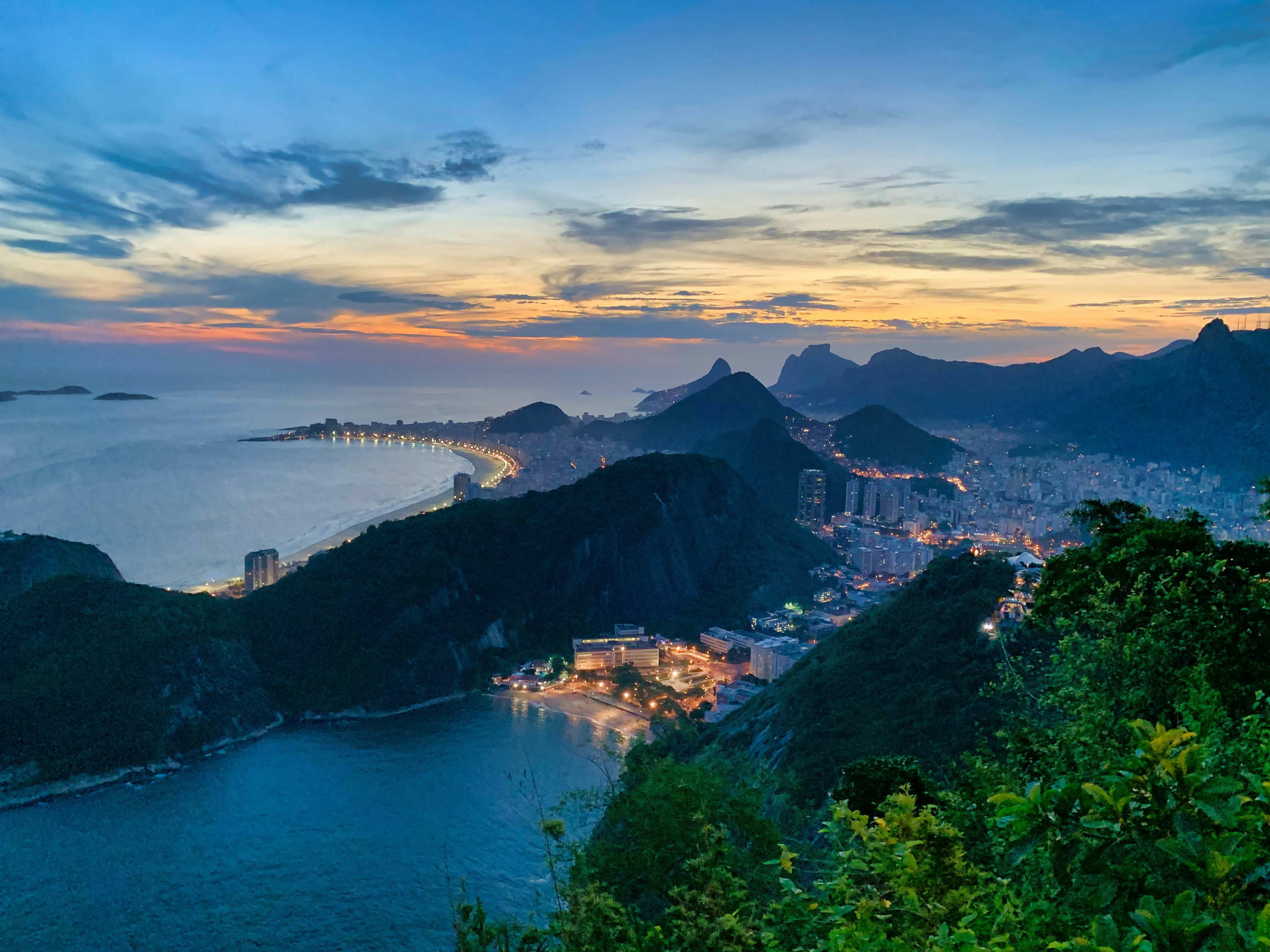
Rio de Janeiro sits at the intersection of mountain and sea in ways that seem almost impossibly beautiful. Granite peaks thrust dramatically from Guanabara Bay’s waters, creating a skyline that photographs can barely capture. Sugarloaf Mountain guards the harbor’s entrance like a stone sentinel, while Corcovado rises above the city, crowned by the outstretched arms of Christ the Redeemer.
The beaches here transcend mere recreation. Copacabana and Ipanema serve as the city’s living rooms, where Cariocas (as Rio residents call themselves) conduct business, socialize, and transition seamlessly from work clothes to swimwear as afternoon arrives. These coastal stretches pulse with the city’s rhythm, embodying a lifestyle that prioritizes joy and community over rigid schedules.
Carnival: The City’s Soul Made Visible

If you want to understand Rio de Janeiro at its most essential, witness Carnival. This isn’t simply a festival but a cultural production of staggering scale and ambition. Samba schools dedicate entire years to preparing their parades, crafting costumes and floats that weave together mythology, social commentary, and pure spectacle.
Visitors can experience this magic in two ways: the official competitions at the Sambadrome showcase technical mastery and artistic vision, while the street parties called “blocos” flood neighborhoods with infectious music and dance. Together, they reveal why Carnival isn’t just something that happens in Rio de Janeiro but something that springs from its very essence.
The Cultural Tapestry

Beyond its famous beaches and festivals, Rio de Janeiro has shaped global culture in surprising ways. This is where bossa nova was born in the 1960s, giving the world “The Girl from Ipanema” and a smoother, more intimate approach to Brazilian music. Today, funk carioca pulses from hillside neighborhoods, creating new rhythms that blend local traditions with contemporary urban energy.
The city’s architectural landscape tells stories across centuries. Santiago Calatrava’s futuristic Museum of Tomorrow stands in striking conversation with colonial churches in the historic center. In Santa Teresa, winding cobblestone streets house artist studios and galleries, maintaining the neighborhood’s bohemian character despite urban pressures.
Food culture here deserves its own exploration. Feijoada, Brazil’s national black bean stew, represents comfort food at its most satisfying, while street vendors offer salgados (savory pastries) that provide quick, delicious sustenance. Eating well in Rio de Janeiro means embracing both refined dining and casual street food with equal enthusiasm.
The city’s passion for football reaches its pinnacle at Maracanã Stadium, which opened in 1950 and remains hallowed ground for the sport. This temple of Brazilian football has witnessed legendary matches, including World Cup finals and Pelé’s thousandth goal. Meanwhile, spaces like the Jardim Botânico (Botanical Garden) offer quieter contemplation, where 19th-century landscaping creates peaceful retreats from urban energy.
Rio de Janeiro’s significance received international recognition in 2012 when UNESCO designated it a World Heritage Site for its cultural landscape, acknowledging the extraordinary integration of natural beauty with urban development.
The Full Picture
Any honest discussion of Rio de Janeiro must acknowledge its contradictions. Favelas climb the same hills that offer million-dollar views, housing nearly one in five city residents. These informal neighborhoods emerged in the late 19th century and expanded rapidly as rural populations sought urban opportunities.
Rather than reduce these communities to stereotypes, it’s worth understanding their cultural contributions. Many of Brazil’s most influential musical forms, from samba to capoeira, have roots in favela culture. These neighborhoods nurture strong social bonds, entrepreneurial spirit, and vibrant traditions that form integral parts of Rio de Janeiro’s identity.
Like other major global cities, Rio de Janeiro deals with urban challenges including petty crime. Practical precautions work well: avoid displaying valuables openly, use licensed transportation at night, and ask locals for current neighborhood advice. Most visitors find the city as welcoming as other international destinations when approached with standard urban awareness.
Embracing Complexity
This coexistence of beauty and challenge defines Rio de Janeiro’s character. You can watch sunrise over Copacabana Beach, hear samba flowing from hillside communities, explore world-class museums, and walk through colonial squares that once governed an empire, all within a single day’s journey.
The city doesn’t hide its contrasts. Instead, it presents them as part of its authentic character, where celebration and struggle, refinement and rawness, exist in dynamic tension. This honesty creates much of Rio de Janeiro’s appeal for thoughtful visitors.
Why Rio Endures

Rio de Janeiro resists simple categorization. It’s simultaneously a beach paradise, carnival stage, cultural crucible, and complex urban center grappling with modern challenges. This multiplicity creates its enduring appeal.
For thoughtful travelers, Rio de Janeiro offers something increasingly rare: a destination that provides immediate sensory pleasure while inviting deeper cultural engagement. You arrive expecting beaches and beauty, but you leave having witnessed a city that embraces its full complexity with remarkable grace.
Perhaps that’s why Rio de Janeiro maintains its hold on global imagination. Like its mistaken name, the city may not always be what it first appears to be, but it consistently rewards those willing to look beyond surface impressions. In a world often reduced to simplistic narratives, Rio de Janeiro insists on nuance, and in that insistence lies much of its enduring magic.


