Gold price chart:
Gold has captivated humanity for millennia, serving as a symbol of wealth, power, and beauty across various cultures and civilizations. This precious metal transcends mere aesthetic appeal, distinguished by its unique physical and chemical properties that make it invaluable across diverse industries. With remarkable malleability, resistance to tarnish, and excellent conductivity, gold remains indispensable in sectors ranging from fine jewelry to sophisticated electronics and precision dentistry.
The cultural significance of gold remains undiminished in our modern world. Across societies, it continues to symbolize wealth and status, playing central roles in traditions, ceremonies, and milestone celebrations. From wedding rings to ceremonial objects, gold’s enduring allure speaks to something fundamental in human nature—our appreciation for rarity, beauty, and permanence.
Gold’s Economic Evolution and Legacy
The historical relationship between gold and global economics runs deep, with gold serving as the foundation for monetary systems for centuries. Under the gold standard, currencies were backed by gold reserves, providing tangible assurance of paper money’s value. This system facilitated international trade through fixed exchange rates among participating nations, creating economic stability and predictability.
However, the rigid nature of the gold standard became apparent during the Great Depression, when it severely restricted policymakers’ ability to respond to economic crises. The system’s inflexibility prevented governments from adjusting monetary policy to address unemployment and deflation. Following World War II, the Bretton Woods system attempted to create a modified gold standard, but this too proved unsustainable, ultimately collapsing in the early 1970s when President Nixon ended the convertibility of the US dollar to gold.
Despite its formal abandonment, the gold standard continues to influence economic thinking and policy debates. Some economists and politicians periodically advocate for its return, arguing that it would limit central banks’ ability to inflate currency through excessive money printing, potentially stabilizing economies and preserving monetary value. However, this perspective faces significant resistance from mainstream economists and governments who view such rigidity as incompatible with the flexible monetary policy required to manage complex modern economies, address crises, and control inflation.
Global Gold Production Landscape
The geography of gold production has undergone dramatic transformation over the past several decades. China emerged as the world’s largest gold producer, accounting for approximately 10% of total global production in 2024, with output reaching 380 metric tons. This represents a remarkable shift from the historical dominance of South Africa, which once controlled global gold markets but now contributes only about 4% of world production.
Global gold production reached 131.4 million ounces in 2024, representing a 2.2% increase over 2023. The production landscape extends beyond China, with Australia, Russia, and Canada ranking among the top producers. Canada is expected to be a key contributor to growth, with production forecast to increase by 15.2%, followed by Indonesia and Ghana with 9.6% and 8.5% respective growth rates.
The shift in production centers reflects changing geological understanding, technological advances in extraction, and evolving economic conditions. Modern mining operations utilize sophisticated techniques to extract gold from increasingly challenging deposits, including low-grade ores and previously inaccessible locations. This technological evolution has enabled countries with substantial but previously uneconomical deposits to become major players in the global gold market.
Gold’s Investment Appeal in 2025

The investment landscape for gold has been particularly compelling in recent years. Gold prices rose 27% in 2024 and continued this strong performance with a 27% increase in the first half of 2025. This remarkable performance reflects gold’s enduring appeal as a safe-haven asset during uncertain times.
Key factors driving gold’s strong performance include the spectre of US tariffs, geopolitical uncertainty, stock market volatility, and US dollar weakness. These market dynamics underscore gold’s traditional role as a hedge against economic instability and currency devaluation.
The precious metal’s performance in 2025 demonstrates its continued relevance in portfolio diversification strategies. Investors increasingly turn to gold during periods of inflation uncertainty, geopolitical tensions, and market volatility. Unlike many financial assets, gold maintains its intrinsic value independent of any government or corporation’s financial health, making it an attractive store of value during turbulent economic periods.
Investment Avenues and Strategies
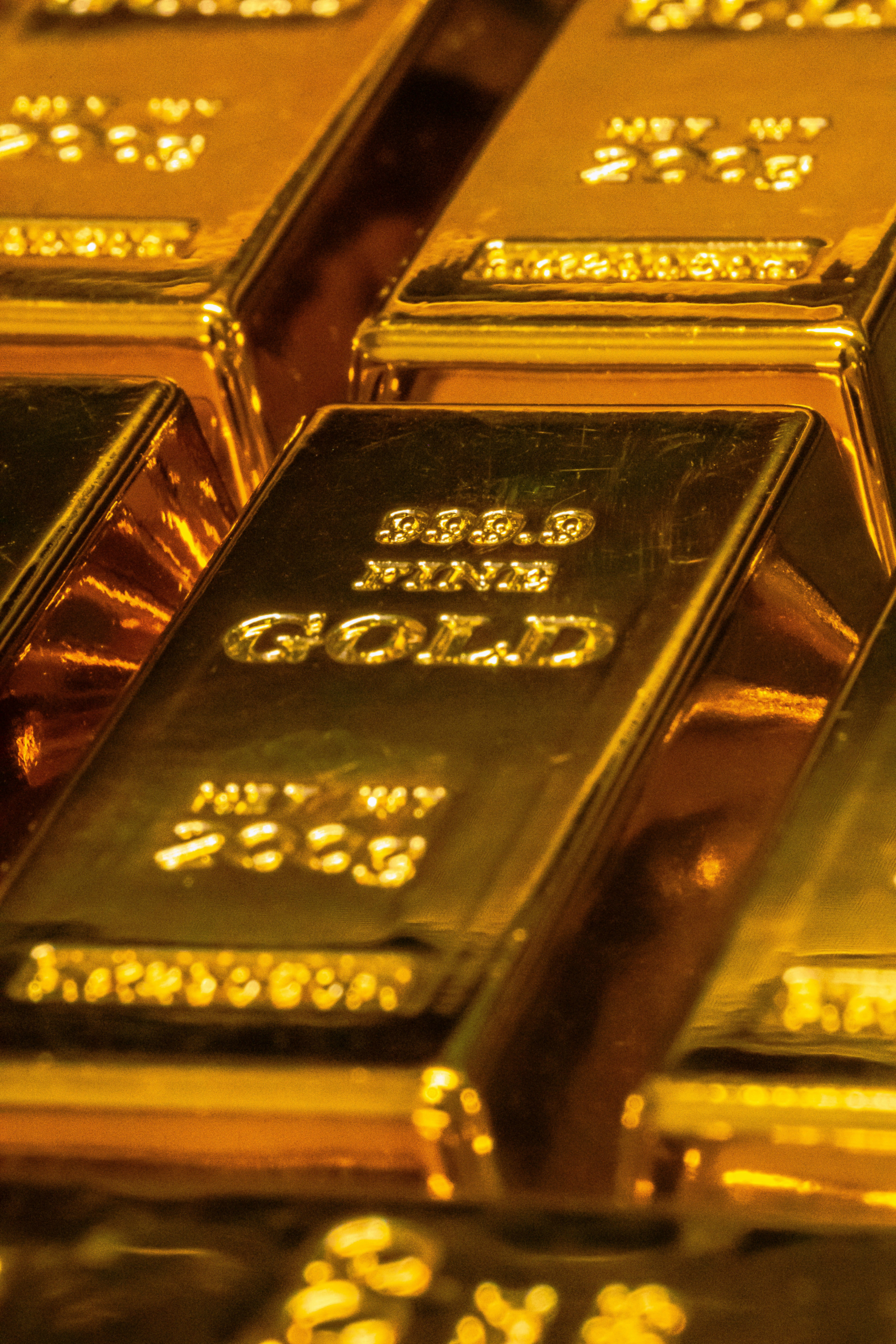
Modern investors have access to diverse gold investment options, each tailored to different risk tolerances and investment strategies. Physical gold ownership through coins, bars, and bullion remains popular among investors seeking direct exposure to the metal. Popular investment coins include American Gold Eagles, Canadian Gold Maple Leafs, and South African Krugerrands, typically available in weights ranging from 1/10th ounce (3.1 grams) to 1 ounce (31.1 grams).
Gold Exchange-Traded Funds (ETFs) provide convenient exposure to gold price movements without the complexities of physical storage and insurance. These funds track gold’s spot price and offer liquidity comparable to stock trading, making them attractive to both retail and institutional investors.
Mining company stocks offer leveraged exposure to gold prices, as mining companies’ profitability typically amplifies gold price movements. However, these investments carry additional risks related to operational challenges, regulatory changes, and company-specific factors. Gold-focused mutual funds provide diversified exposure across multiple mining companies, potentially reducing individual company risks.
For sophisticated investors, gold futures contracts and options provide opportunities for both speculation and hedging. These derivative instruments allow investors to gain exposure to gold price movements with lower capital requirements, though they involve greater complexity and risk.
Technological Applications and Industrial Demand
Beyond its monetary and investment functions, gold’s unique properties ensure strong industrial demand. The electronics industry relies heavily on gold for its excellent conductivity and corrosion resistance. Circuit boards, connectors, and semiconductors incorporate gold to ensure reliable performance in critical applications. A typical smartphone contains approximately 0.024 grams of gold, while computers may contain 0.2 grams or more.
The aerospace industry utilizes gold for specialized applications where reliability is paramount. Satellite components, space vehicles, and aircraft systems employ gold-plated connections and components to withstand extreme conditions. Gold’s reflective properties make it essential for thermal management in spacecraft and satellites.
Medical and dental applications represent another significant demand source. Gold’s biocompatibility makes it suitable for dental restorations, while its properties are increasingly important in medical devices and diagnostic equipment. Emerging applications in nanotechnology and renewable energy systems suggest potential new sources of industrial demand.
Market Dynamics and Price Drivers
Gold prices respond to multiple interconnected factors that reflect both economic fundamentals and market sentiment. Central bank policies significantly influence gold prices, as changes in interest rates affect the opportunity cost of holding non-yielding assets. When real interest rates decline, gold becomes relatively more attractive compared to interest-bearing alternatives.
Inflation expectations play a crucial role in gold pricing. Historically, gold has served as an inflation hedge, with prices often rising during periods of high or rising inflation. However, this relationship can be complex, as the effectiveness of gold as an inflation hedge varies across different economic environments and time periods.
Currency movements, particularly the US dollar’s strength or weakness, inversely correlate with gold prices. Since gold is priced in dollars globally, a weaker dollar makes gold more affordable for holders of other currencies, potentially increasing demand. Conversely, a stronger dollar can pressure gold prices lower.
Geopolitical events and market uncertainty typically drive safe-haven demand for gold. During periods of political instability, military conflicts, or financial market stress, investors often seek gold’s perceived stability and store-of-value characteristics.
Storage and Security Considerations
Physical gold ownership requires careful consideration of storage and security options. Home storage, while providing direct control, involves significant security risks and may affect insurance coverage. Professional storage solutions include bank safety deposit boxes, private vault services, and specialized precious metals depositories.
Storage costs vary considerably based on location, security levels, and services provided. Bank safety deposit boxes typically cost $50-$300 annually, while private vault services may charge 0.5-2% of the gold’s value per year. Some services offer segregated storage, where individual holdings are separately identified and stored, while others provide allocated storage where specific bars or coins are assigned to investors.
Insurance considerations are crucial for gold ownership. Homeowner’s insurance typically provides limited coverage for precious metals, often capped at $200-$500. Specialized precious metals insurance policies offer broader coverage but require detailed documentation and professional appraisals.
Future Outlook and Market Projections
The outlook for gold remains optimistic among many analysts and investors. Long-term price projections reflect bullish sentiment based on various economic factors and technical analysis.
Several structural factors support long-term gold demand. Central bank gold purchases have increased significantly in recent years, with institutions seeking to diversify reserves away from traditional currencies. Emerging market economic growth is driving increased jewelry and investment demand. Additionally, potential new technological applications in renewable energy and advanced manufacturing could create additional industrial demand.
However, gold faces challenges from digital alternatives and changing investor preferences. Cryptocurrencies, despite their volatility, appeal to some investors seeking alternatives to traditional monetary systems. Younger investors may be more attracted to technology-focused investments rather than traditional precious metals.
Environmental and social governance (ESG) considerations are increasingly important in gold mining operations. Sustainable mining practices, community engagement, and environmental protection are becoming essential for mining companies’ long-term viability and social license to operate.
Conclusion
Gold’s enduring appeal stems from its unique combination of beauty, rarity, and practical utility. As both a tangible asset and a symbol of value, gold continues to play multiple roles in the modern economy. Its performance in 2025, with substantial price appreciation driven by economic uncertainty and geopolitical tensions, demonstrates its continued relevance as a portfolio diversification tool and store of value.
The precious metal’s future depends on various factors, including monetary policy decisions, technological innovations, and changing investor preferences. While the formal gold standard remains a relic of the past, gold’s role in investment portfolios, industrial applications, and cultural traditions ensures its continued importance in the global economy.
For investors considering gold exposure, understanding the various investment options, associated risks, and storage considerations is essential. Whether through physical ownership, ETFs, or mining company stocks, gold offers unique characteristics that can enhance portfolio diversification and provide protection against economic uncertainty.
As we navigate an increasingly complex global economy, gold’s timeless appeal and practical utility position it to remain a significant asset class for investors seeking stability, diversification, and protection against monetary debasement. The yellow metal’s journey from ancient currency to modern investment asset reflects humanity’s enduring relationship with this remarkable precious metal.