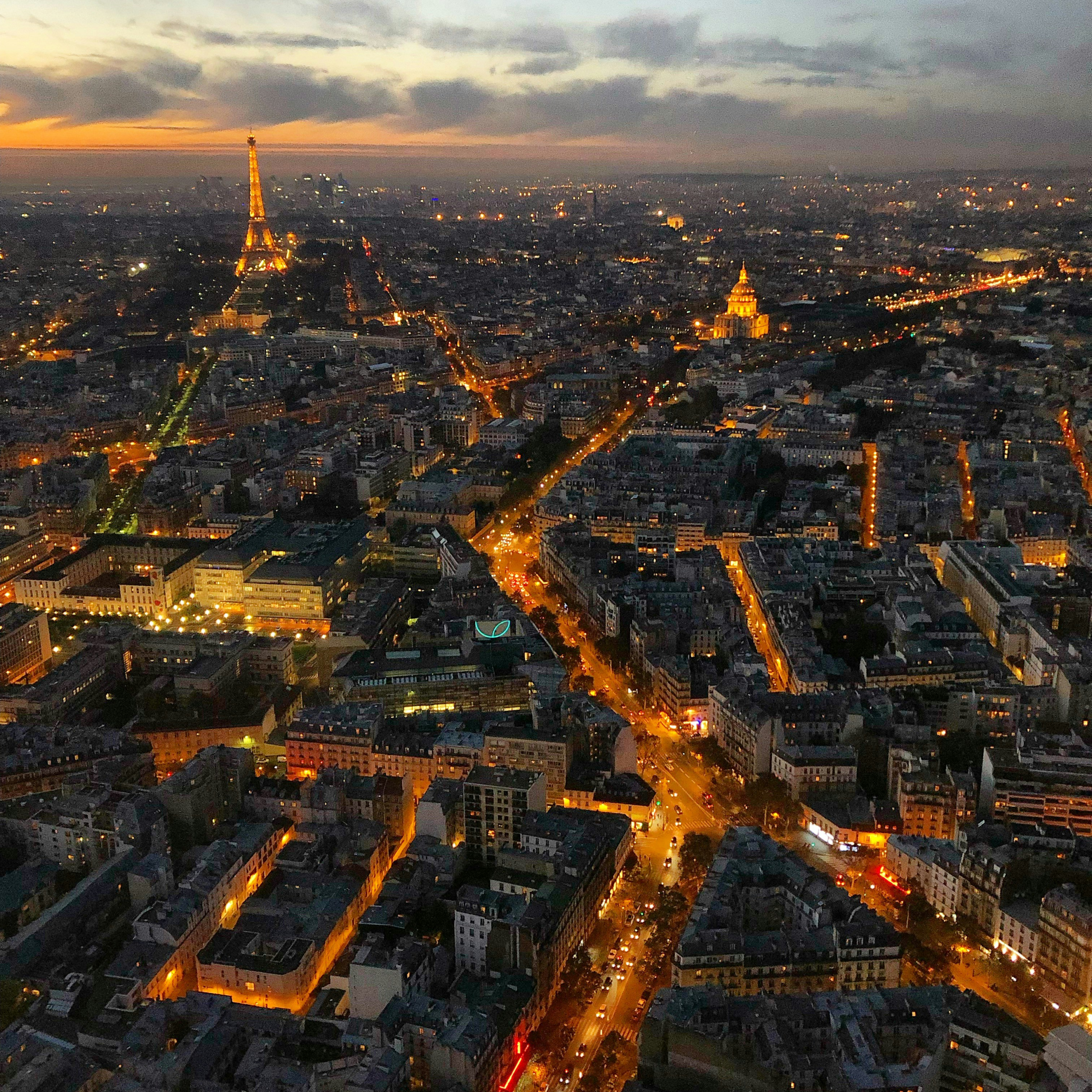
Paris stands as one of the world’s most captivating destinations, where centuries of history blend seamlessly with contemporary sophistication. From the iconic silhouette of the Eiffel Tower against the evening sky to the cobblestone streets of Montmartre echoing with artistic legacy, the French capital offers an unparalleled experience that transcends mere tourism.
This comprehensive exploration of Paris reveals both its celebrated landmarks and hidden treasures, designed for the discerning traveler seeking authentic encounters with one of Europe’s most enchanting cities.
Arriving in the Capital
Paris welcomes visitors through multiple gateways, each offering distinct advantages for the modern traveler. Charles de Gaulle Airport, located 16 miles (25 km) northeast of the city center, serves as the primary international hub, connected to central Paris via the efficient RER B train line, which completes the journey in approximately 35 minutes. The alternative Orly Airport, positioned 8 miles (13 km) south of the city, provides convenient access through the Orlyval shuttle and RER connections.
For those arriving from London or northern European destinations, the Eurostar high-speed service presents an elegant alternative, gliding into Gare du Nord station at the heart of the city. This remarkable journey beneath the English Channel deposits passengers directly into Paris’s extensive public transportation network, eliminating the need for additional transfers.
Once within the city, Paris reveals itself through one of the world’s most comprehensive urban transport systems. The Metro, with its distinctive Art Nouveau entrances designed by Hector Guimard, connects virtually every corner of the capital through 14 interconnected lines. The complementary bus network and expanding bicycle infrastructure, including the popular Vélib’ bike-sharing system, provide alternative means of exploration for those preferring surface-level discoveries.
The Historic Foundation: Île de la Cité and Medieval Splendor
The story of Paris begins on the Île de la Cité, where the Seine creates a natural fortress that has sheltered human settlement for over two millennia. This river island, measuring approximately 0.4 miles (0.6 km) in length, contains some of France’s most significant architectural achievements.
Notre-Dame Cathedral, though currently undergoing meticulous restoration following the devastating 2019 fire, remains an enduring symbol of Gothic architecture. The cathedral’s twin towers, rising 226 feet (69 meters) above the medieval streets, have witnessed eight centuries of French history. While interior access remains limited during restoration, the exterior’s flying buttresses and intricate stone carvings continue to inspire awe from the surrounding squares and bridges.
The nearby Sainte-Chapelle presents one of medieval Europe’s most breathtaking artistic achievements. Built by King Louis IX in the 13th century, this royal chapel houses 1,113 stained glass panels depicting biblical scenes in luminous detail. The upper chapel’s soaring walls, reaching 65 feet (20 meters) in height, create an ethereal atmosphere where light transforms colored glass into living scripture.
The Conciergerie, once a medieval palace and later a revolutionary prison, offers compelling insights into French history’s darker chapters. Within these walls, Marie Antoinette spent her final months before execution, and the building’s Gothic halls now house exhibitions chronicling the French Revolution’s dramatic events.
Crossing the Seine: The Marais District
The Marais district, stretching across the 3rd and 4th arrondissements, represents Paris’s most successfully preserved medieval quarter. This neighborhood’s narrow streets, unchanged since the 17th century, harbor exceptional architectural treasures and contemporary cultural vibrancy.
The Place des Vosges, completed in 1612, stands as Paris’s oldest planned square and perhaps its most beautiful. The symmetrical red brick facades, punctuated by steep slate roofs and dormer windows, create an enclosed garden courtyard where Victor Hugo once resided. The surrounding arcades house art galleries, antique shops, and intimate cafés that embody the district’s sophisticated atmosphere.
The Jewish quarter, centered on the Rue des Rosiers, offers authentic Middle Eastern cuisine alongside traditional Ashkenazi establishments. This area’s synagogues, including the Art Nouveau Synagogue de la rue Pavée designed by Hector Guimard in 1913, reflect the diverse cultural heritage that enriches contemporary Parisian life.
Artistic Treasures: Museums and Cultural Institutions

The Louvre Museum, housed within the former royal palace, contains the world’s most extensive art collection, spanning 35,000 works across 650,000 square feet (60,000 square meters) of gallery space. Beyond the universally recognized Mona Lisa and Venus de Milo, the museum’s collections encompass masterpieces from ancient civilizations through the mid-19th century. The glass pyramid entrance, completed by I.M. Pei in 1989, provides a striking contemporary contrast to the classical facades surrounding the Cour Napoléon.
The Musée d’Orsay, occupying a beautifully converted Belle Époque railway station, specializes in Impressionist and Post-Impressionist masterpieces. The museum’s collection, featuring works by Monet, Renoir, Degas, and Van Gogh, traces the revolutionary artistic movements that transformed Western art between 1848 and 1914. The building’s soaring iron and glass architecture, with its 138-foot (42-meter) barrel-vaulted ceiling, creates an inspiring backdrop for these artistic innovations.
The Centre Pompidou challenges conventional museum architecture with its high-tech exterior of exposed structural elements and color-coded mechanical systems. This radical design, completed in 1977, houses Europe’s largest collection of contemporary art, including works by Picasso, Kandinsky, and Duchamp. The building’s exterior escalators provide panoramic views across Paris’s historic rooftops.
The Iron Lady: Eiffel Tower and Trocadéro
The Eiffel Tower, rising 984 feet (300 meters) above the Champ de Mars, represents the pinnacle of 19th-century engineering achievement. Gustave Eiffel’s iron lattice construction, completed for the 1889 World’s Fair, initially faced considerable criticism but has since become the world’s most recognizable architectural symbol.
The tower’s three observation levels offer progressively spectacular views across the capital. The first level, at 187 feet (57 meters), features glass floors and multimedia presentations about the tower’s construction. The second level, at 377 feet (115 meters), provides optimal photographic opportunities, while the summit level, at 905 feet (276 meters), offers champagne service alongside breathtaking panoramic vistas.
The hourly light display, featuring 20,000 golden bulbs, transforms the tower into a glittering beacon visible throughout the city. This five-minute spectacle, occurring every hour after sunset, creates magical moments best appreciated from the Trocadéro gardens across the Seine.
Imperial Grandeur: Champs-Élysées and Arc de Triomphe

The Avenue des Champs-Élysées, stretching 1.2 miles (1.9 km) from Place de la Concorde to the Arc de Triomphe, embodies Parisian elegance and commercial sophistication. This tree-lined boulevard, measuring 230 feet (70 meters) in width, houses flagship boutiques, grand cafés, and theaters that define contemporary French style.
The Arc de Triomphe, commissioned by Napoleon in 1806, stands 164 feet (50 meters) tall at the center of the Place Charles de Gaulle. The monument’s intricate sculptural reliefs, including François Rude’s famous “La Marseillaise,” commemorate France’s military victories. The eternal flame beneath the arch honors unknown soldiers from both World Wars, maintained through daily rekindling ceremonies.
The arch’s rooftop terrace, accessible via 284 spiral steps, provides commanding views down the Champs-Élysées toward the Louvre and across to the modern skyscrapers of La Défense business district.
Bohemian Heights: Montmartre and Sacré-Cœur
Montmartre, crowned by the Basilique du Sacré-Cœur, represents Paris’s most romantic and artistically significant neighborhood. This elevated district, rising 425 feet (130 meters) above sea level, has inspired generations of artists, writers, and musicians who found refuge in its affordable studios and vibrant cabarets.
The Sacré-Cœur Basilica, completed in 1914, combines Romanesque and Byzantine architectural elements in its distinctive white stone construction. The basilica’s central dome, rising 272 feet (83 meters) above the Montmartre hill, houses one of the world’s largest bells, weighing 19 tons. The interior’s golden mosaics, covering 5,400 square feet (500 square meters), create a luminous atmosphere for contemplation and prayer.
The Place du Tertre, just behind the basilica, maintains Montmartre’s artistic traditions through portrait artists and painters who work in the square’s cafés and under its plane trees. The surrounding streets, including the Rue des Saules and Rue de l’Abreuvoir, contain some of Paris’s most picturesque corners, with ivy-covered houses and hidden gardens that recall the area’s village origins.
Left Bank Intellectualism: Latin Quarter and Saint-Germain
The Latin Quarter, centered on the ancient Sorbonne University, pulsates with intellectual energy that has attracted scholars for eight centuries. The district’s medieval streets, radiating from the Boulevard Saint-Michel, contain bookshops, student cafés, and academic institutions that define France’s educational traditions.
The Panthéon, inspired by Rome’s ancient temple, serves as a mausoleum for France’s greatest citizens. The building’s neoclassical dome, rising 272 feet (83 meters) above the Montagne Sainte-Geneviève, shelters the tombs of Voltaire, Rousseau, Marie Curie, and other luminaries who shaped French civilization.
Saint-Germain-des-Prés, adjacent to the Latin Quarter, epitomizes Left Bank sophistication through its literary cafés, art galleries, and fashion boutiques. The historic Café de Flore and Les Deux Magots continue to attract intellectuals and celebrities, maintaining traditions established by Jean-Paul Sartre, Simone de Beauvoir, and Ernest Hemingway.
Green Sanctuaries: Parks and Gardens
Parisians treasure their green spaces, which provide essential respite from urban intensity. The Jardin des Tuileries, extending 0.6 miles (1 km) between the Louvre and Place de la Concorde, exemplifies French formal garden design through its geometric pathways, sculptural collections, and seasonal flower displays.
The Luxembourg Gardens, covering 56 acres (23 hectares), offer more diverse recreational opportunities around the Luxembourg Palace. The park’s central basin, surrounded by tree-lined promenades, provides model boat sailing for children and contemplative benches for adults. The gardens’ 106 statues, representing French queens and notable women, create an outdoor sculpture gallery complementing the formal landscaping.
The Parc des Buttes-Chaumont, created from abandoned quarries in the 19th century, presents a more dramatic landscape with artificial cliffs, waterfalls, and the Temple de la Sibylle perched on a rocky island. This 61-acre (25-hectare) park offers spectacular views across northern Paris and provides a romantic retreat from the city’s bustling streets.
Culinary Excellence: Parisian Gastronomy

Parisian cuisine represents the pinnacle of French culinary traditions, from simple bistro fare to haute cuisine innovations. The city’s markets, including the historic Marché des Enfants Rouges dating to 1628, provide fresh ingredients that define seasonal menus throughout the capital.
Traditional brasseries serve classic dishes like coq au vin, bouillabaisse, and steak-frites in environments that have remained unchanged for decades. The zinc bars, mosaic floors, and banquette seating of establishments like Brasserie Lipp and Café de la Paix create authentic Parisian dining experiences.
The city’s patisseries, including legendary establishments like Pierre Hermé, Stohrer, and Ladurée, transform sugar, flour, and butter into artistic creations. These shops’ windows display éclairs, macarons, and mille-feuille with jewel-like precision, making pastry selection a visual feast preceding gustatory pleasure.
Fashion Capital: Shopping and Style
Paris maintains its position as the global fashion capital through haute couture houses, designer boutiques, and innovative retail concepts. The Avenue Montaigne and Rue du Faubourg Saint-Honoré house flagship stores for Chanel, Dior, Hermès, and other luxury brands that define international style.
The Marais district offers more accessible fashion through independent designers and vintage specialists who create unique pieces unavailable elsewhere. The area’s boutiques, often housed in historic buildings, provide intimate shopping experiences with personalized service.
The grand department stores, including Galeries Lafayette and Le Bon Marché, transform shopping into theatrical experiences through their architectural splendor and creative displays. These establishments’ stained glass domes, sweeping staircases, and seasonal decorations create memorable retail environments.
Cultural Immersion: Living Like a Parisian

Understanding Paris requires embracing its cultural rhythms and social customs. The café terrace represents the city’s most democratic institution, where people from all walks of life gather to observe, converse, and participate in daily urban theater. These outdoor tables, protected by French law, provide front-row seats to Parisian life.
The Seine’s walkways, particularly the Promenade Plantée built on an abandoned railway viaduct, offer elevated perspectives on the city’s architectural evolution. This 2.9-mile (4.7 km) linear park demonstrates how Paris successfully integrates historic preservation with contemporary urban planning.
Evening entertainment encompasses everything from opera at the Palais Garnier to contemporary performances at the Philharmonie de Paris. The city’s theaters, jazz clubs, and concert halls provide cultural experiences that extend far beyond tourist attractions.
Practical Considerations for Sophisticated Travelers
The optimal times to visit Paris are April through June and September through October, when moderate temperatures and manageable crowds create ideal conditions for exploration. Summer months bring increased tourist activity and higher temperatures, while winter offers unique pleasures including Christmas markets and reduced accommodation rates.
The city’s extensive public transportation system, including Metro, buses, and trams, provides efficient access to all major attractions. The Navigo weekly pass offers unlimited travel across all zones, while walking remains the most rewarding method for discovering neighborhood character.
Safety considerations are minimal in central Paris, though standard urban precautions regarding pickpocketing in crowded areas remain advisable. The city’s numerous police stations and tourist information centers provide assistance in multiple languages.
The Enduring Allure of Paris
Paris succeeds as a destination because it offers multiple layers of discovery. First-time visitors encounter iconic landmarks that fulfill lifelong dreams, while returning travelers uncover hidden squares, neighborhood bistros, and cultural institutions that reveal new facets of the city’s character.
The capital’s true magic lies in its ability to make the extraordinary seem everyday. Here, architectural masterpieces serve as backdrops to morning coffee, world-class art collections provide lunch-hour inspiration, and evening strolls along the Seine become personal pilgrimage experiences.
Whether seeking romance, intellectual stimulation, culinary adventure, or artistic inspiration, Paris provides a stage where personal dreams intersect with centuries of cultural achievement. The City of Light continues to illuminate new possibilities for those willing to embrace its timeless charm and contemporary dynamism.